
Typical steel double door
A typical setup here is a 16x7 double or 9x7 single, steel skin over a light foam core, hung on galvanized torsion springs sized to the door's original weight. Thirty years on, that's showing.
Howard, Green Bay
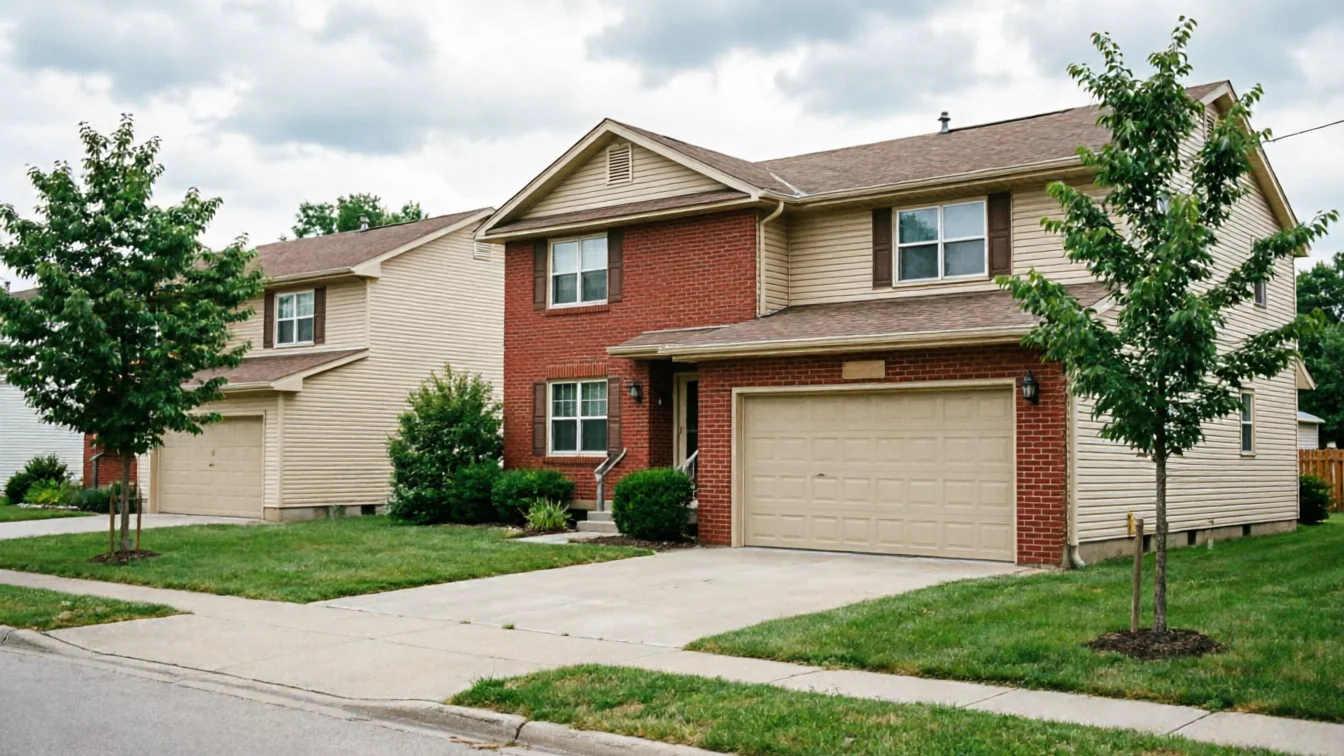
Howard homes mostly date to the mid-1990s, so the garage door install here means matching steel sectional panels and torsion hardware to that era, built for severe cold.
Warning signs
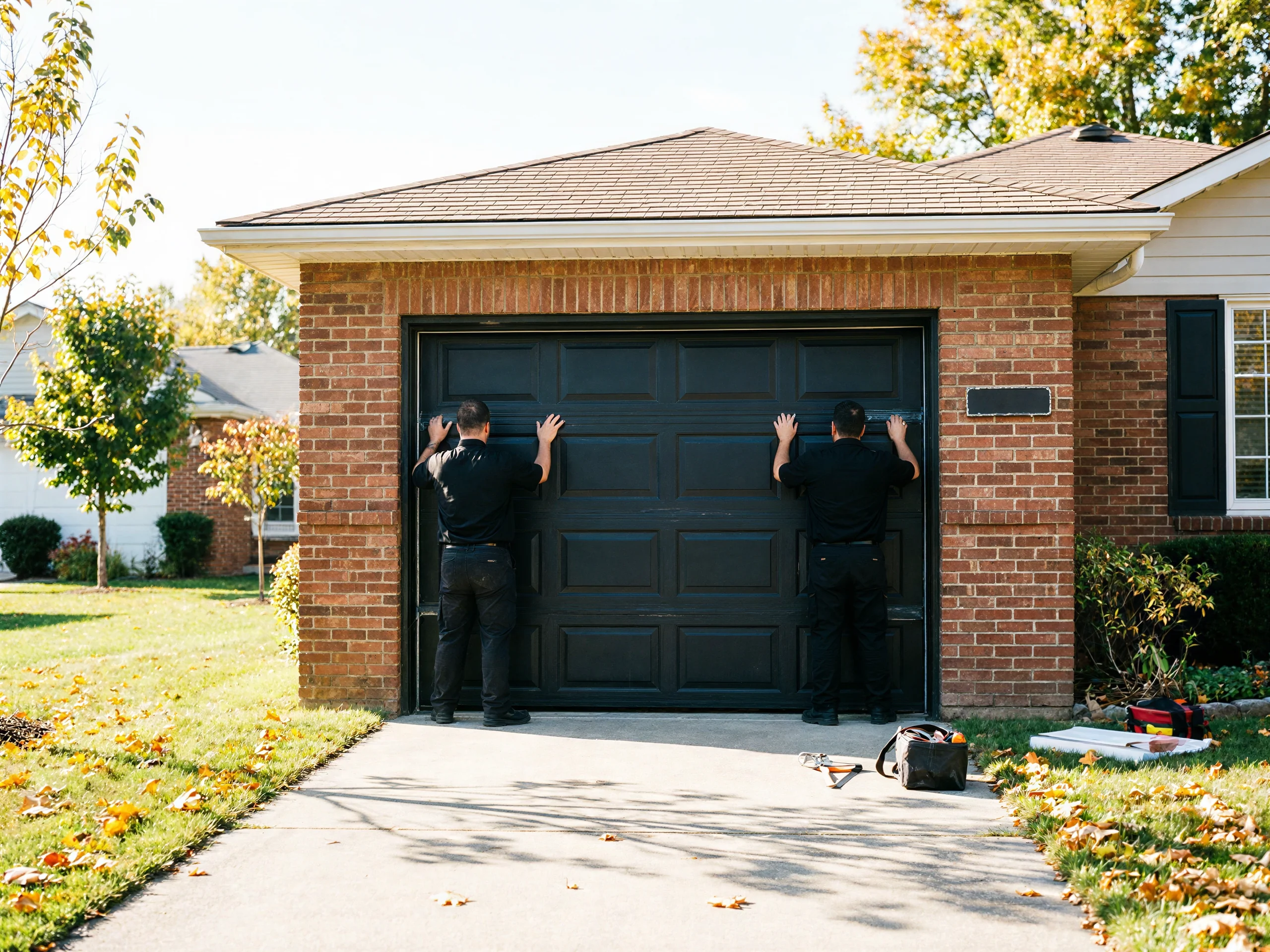
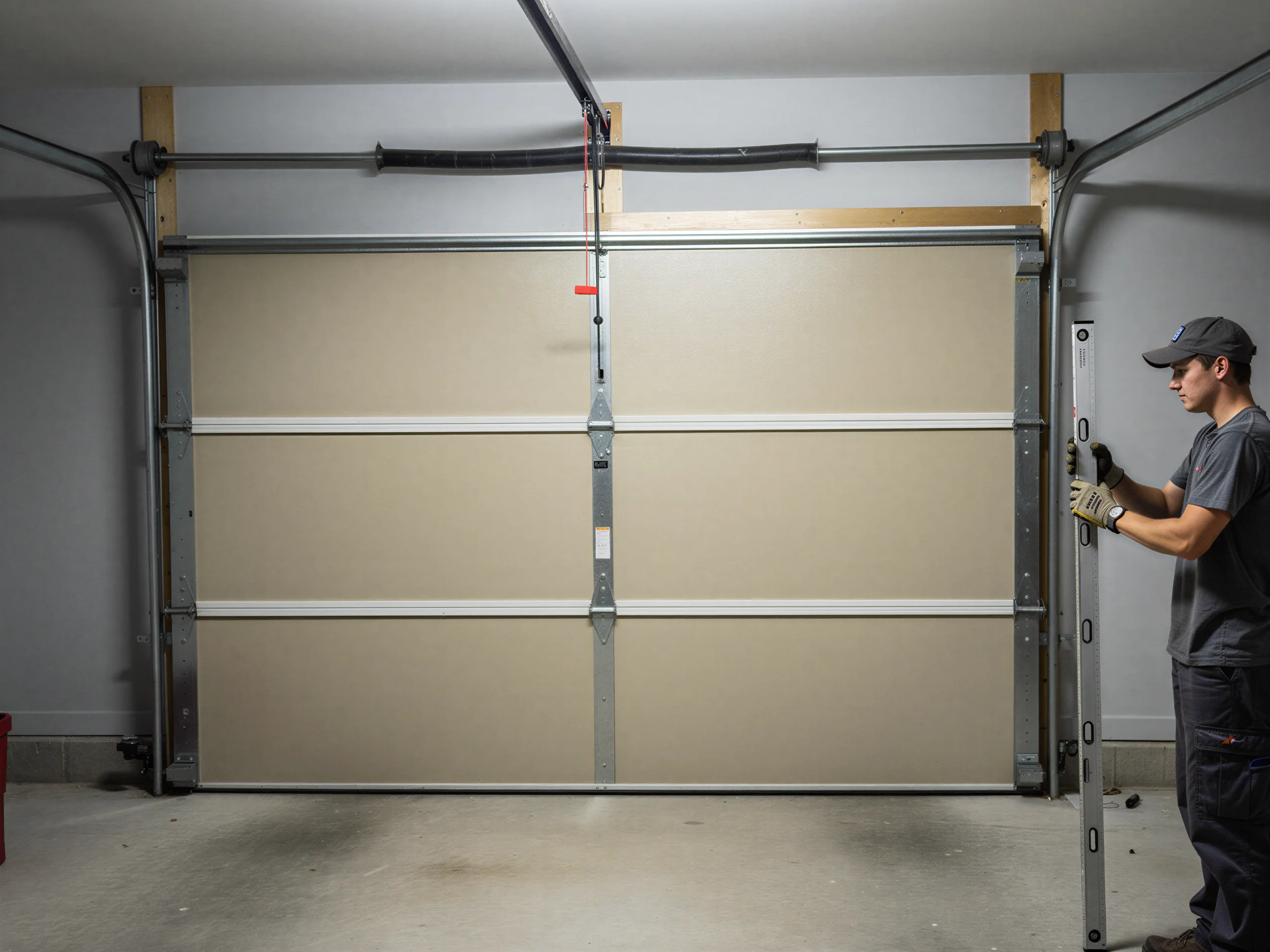
Start with what's actually hanging in the opening. Howard's median home was built in 1994, a decade newer than the 1985 median across the wider service area, which puts most of these garages into the steel sectional category builders favored through the 1980s and 90s rather than the older wood or single-panel doors you'll find on earlier housing.
A typical setup here is a 16x7 double or 9x7 single, steel skin over a light foam core, hung on galvanized torsion springs sized to the door's original weight. Thirty years on, that's showing.
Panels bow at the bottom corner where water sits, the foam core has shrunk away from the skin so the door rattles in wind, and the factory weatherstrip has gone brittle and cracked in the cold.
None of that is a spring problem or a track problem - it's the door itself reaching the end of what steel from that build era was made to do. Replacement starts getting discussed once the panels are visibly out of square or the insulation value has dropped enough that you can feel cold air coming through the seams on a January morning.
Timing
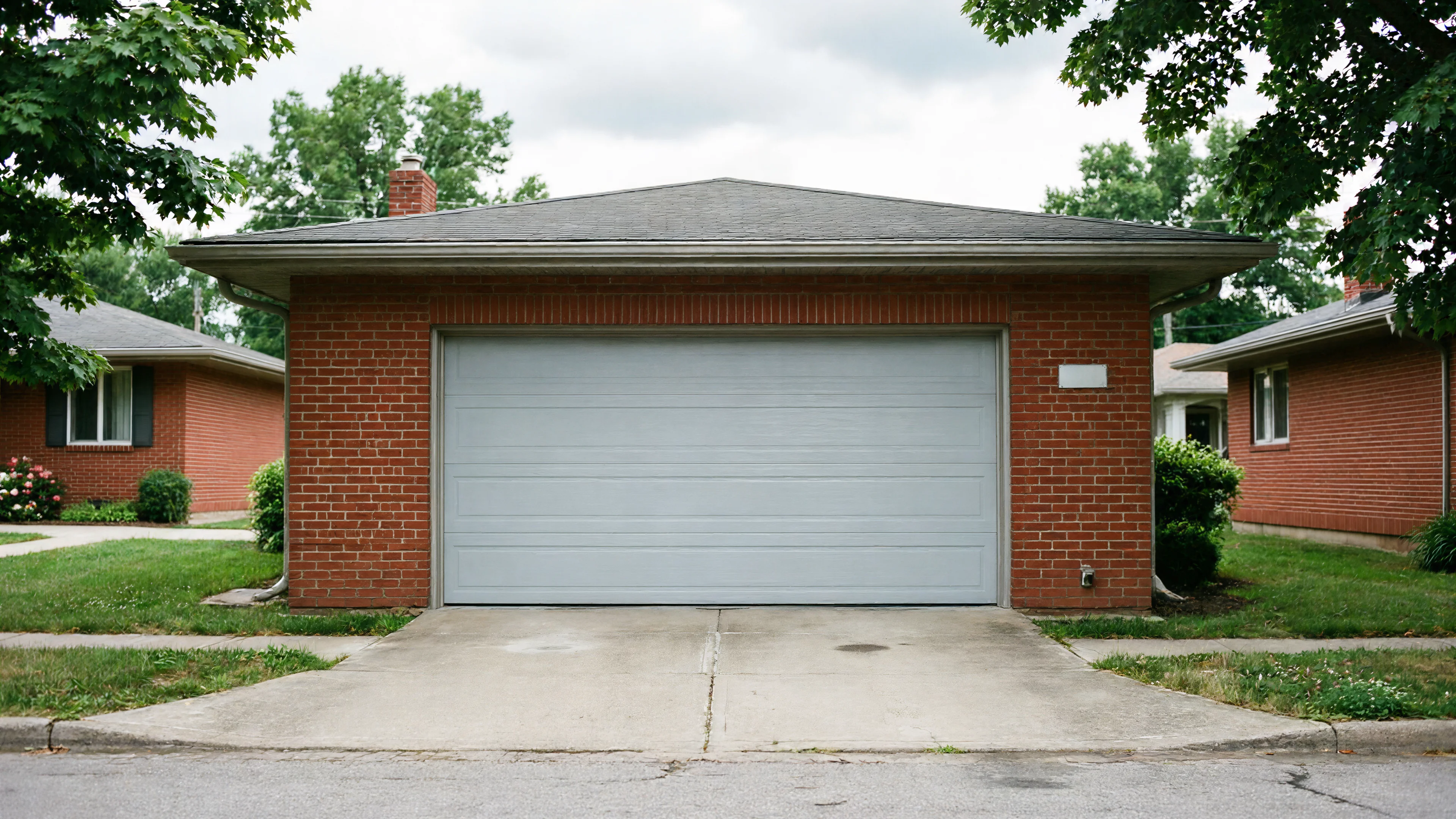
We don't have a posted turnaround time to quote you here, and giving you one would be a guess - lead time depends on what panel style and insulation package you pick, and some of that comes from the manufacturer rather than off a shelf. What we can tell you is the install itself, once the door is on site, is a single-day job: old door and track come out, new jambs get checked for square against the 1990s-era framing common in Howard, new track and springs go in sized to the new door's weight, and the opener gets reconnected and balanced. If your existing opener is older than the door going in, that's worth flagging before the day of install rather than after.
Watch-outs
Serving Green Bay, WI
The main wrinkle on houses from this build era is headroom. Builders in the 80s and 90s often left just enough clearance for a standard torsion setup and nothing more, so an upgrade to a higher-insulation door with a thicker panel section can mean reworking the spring mount or switching to a low-headroom track kit. The other wrinkle is weather sealing. This region sits in a severe cold climate band, and a door original to 1994 construction usually wasn't speced with much more than a thin foam core - fine for the standard it was built to meet at the time, not great by today's insulation expectations. If you're replacing rather than repairing specifically to cut heat loss into an attached garage, that changes which door we'd put in versus a straight swap. One limitation worth saying plainly: if the opening itself is out of square from decades of settling, that's a carpentry fix before the door goes in, not something a new door solves on its own.
The repair
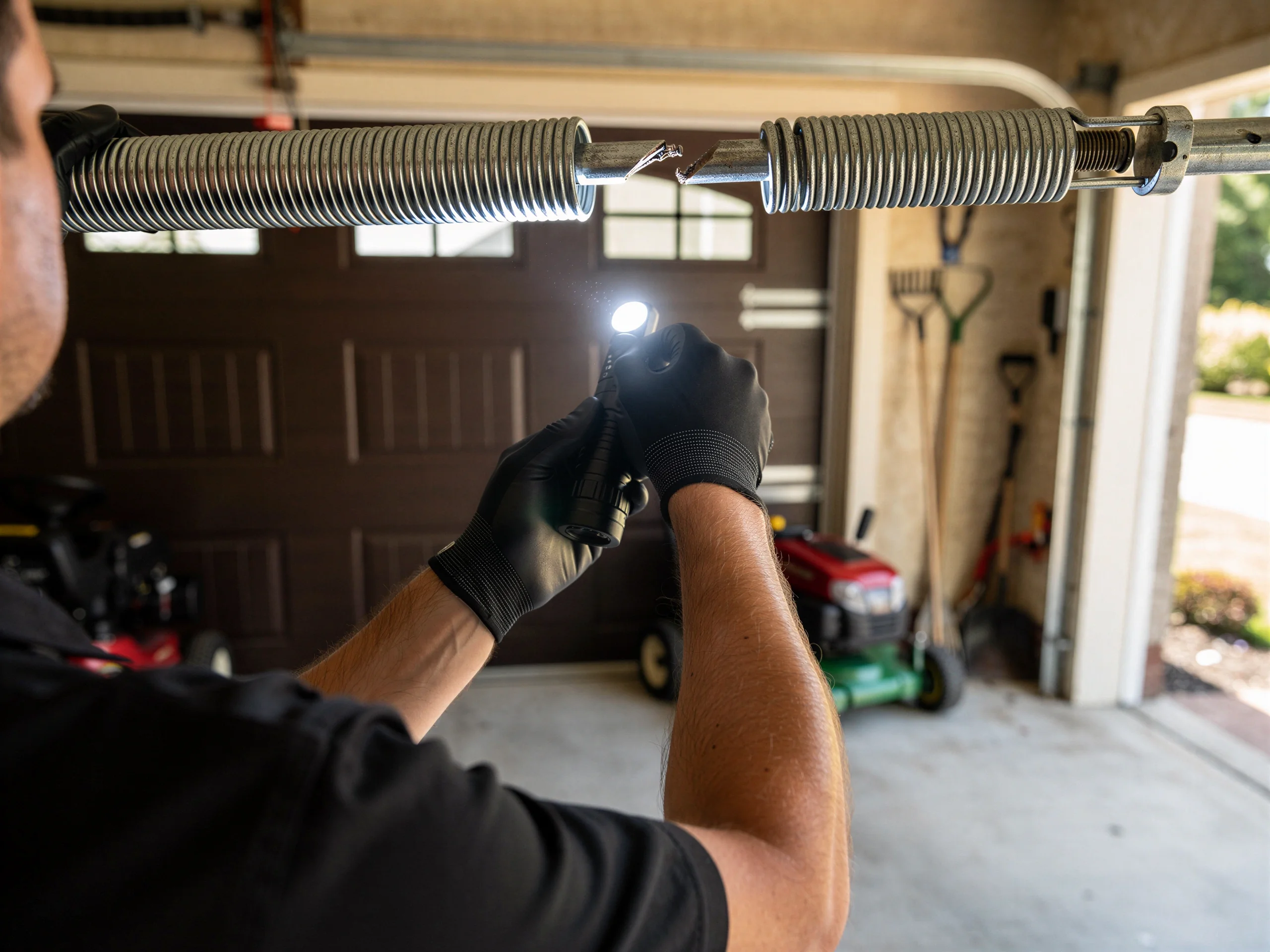
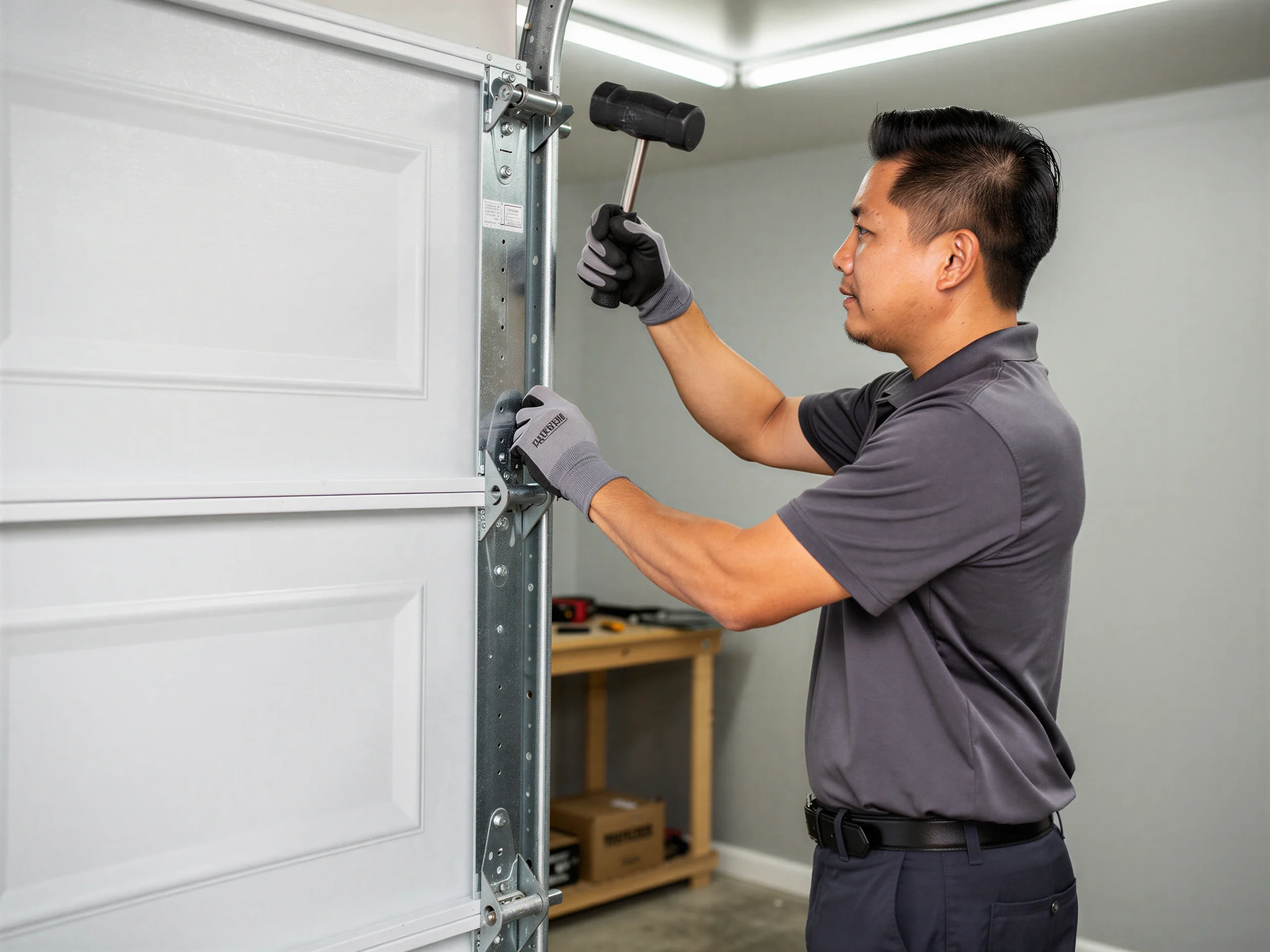
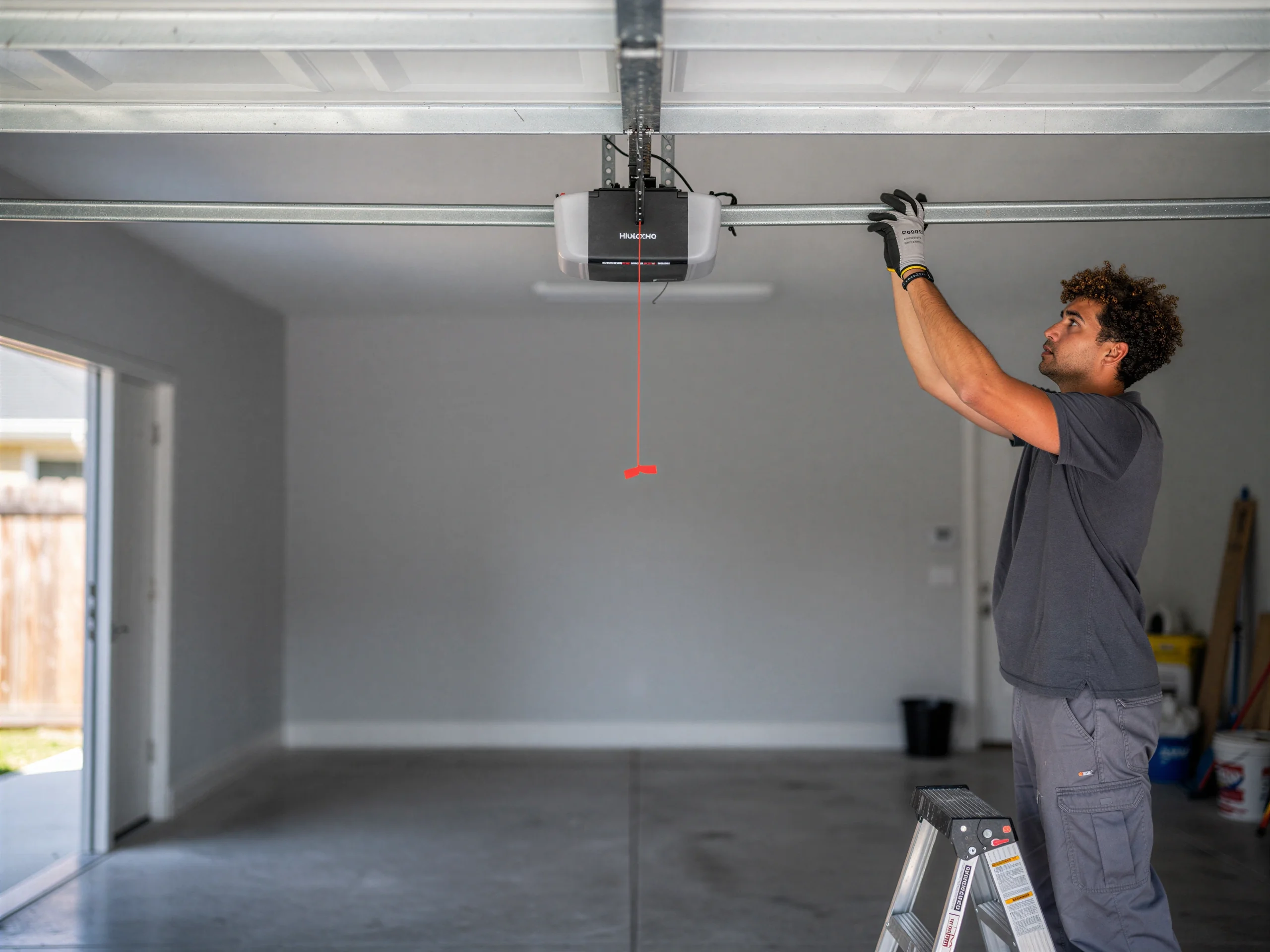
Pulling an old sectional door starts with releasing spring tension safely, then stripping the track, hinges, and cable drums off the jamb. On Howard's 1990s housing stock the jamb framing is usually standard and square enough that new vertical track mounts straight to existing lag points, which keeps labor predictable.
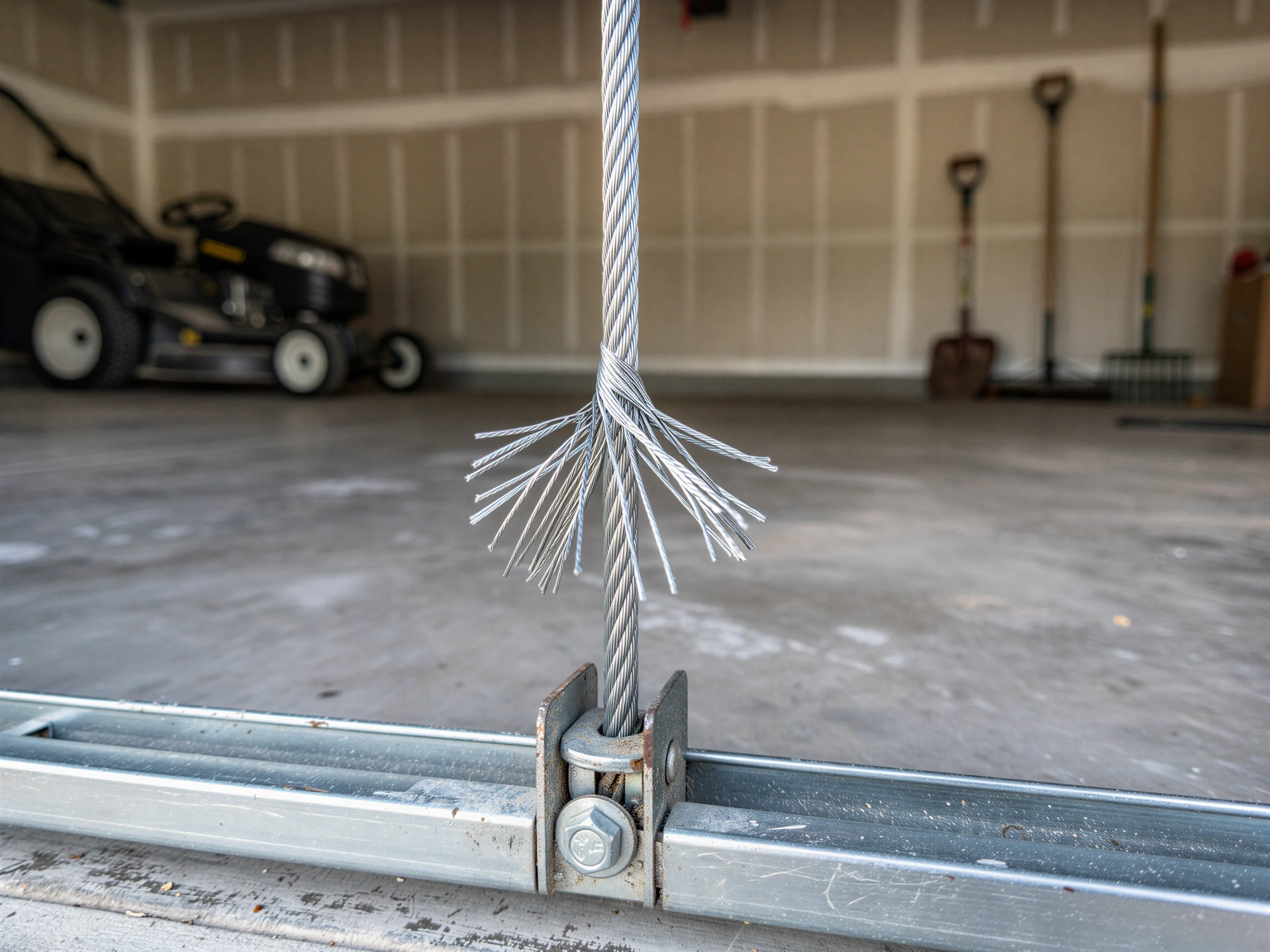
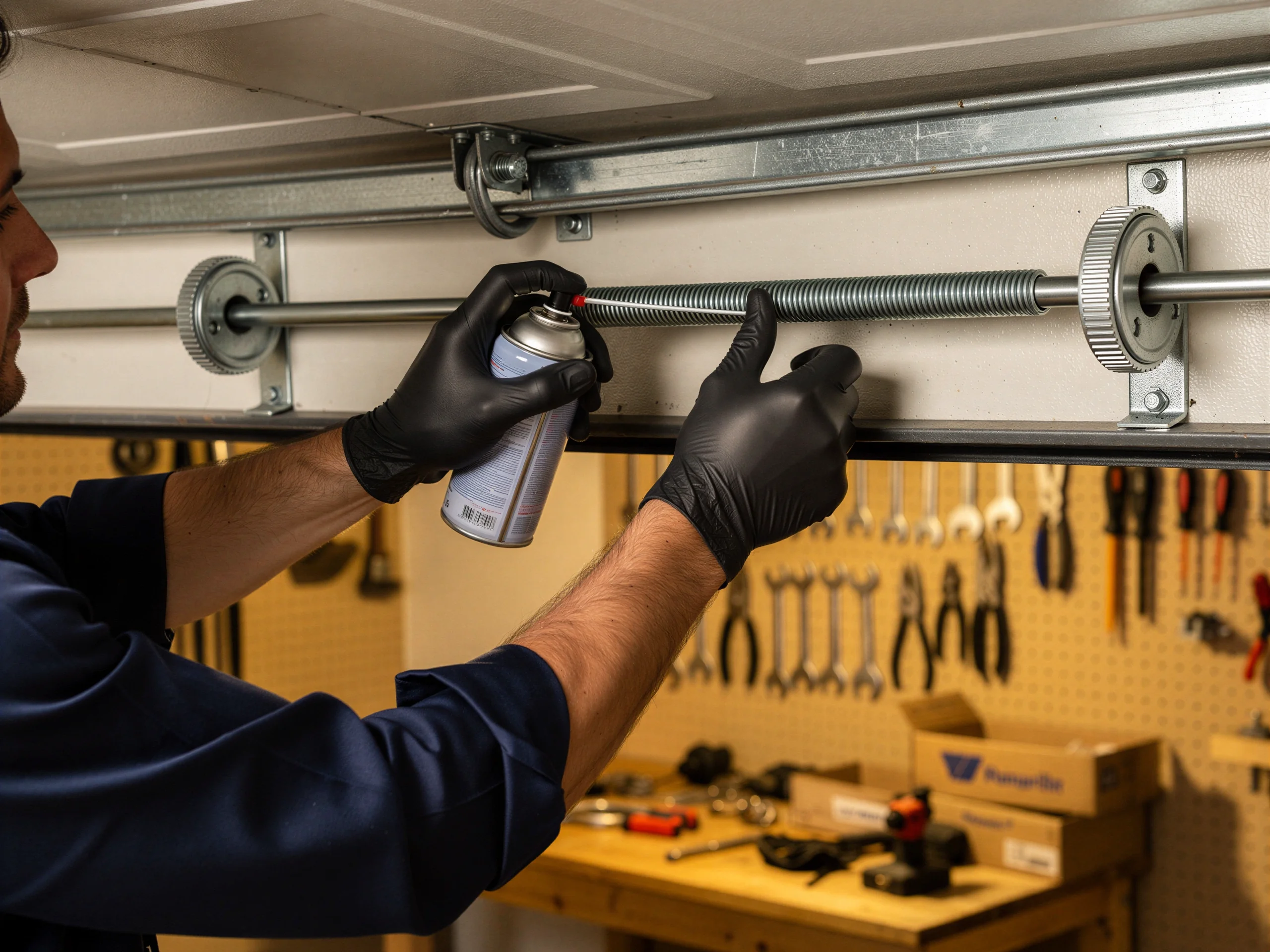
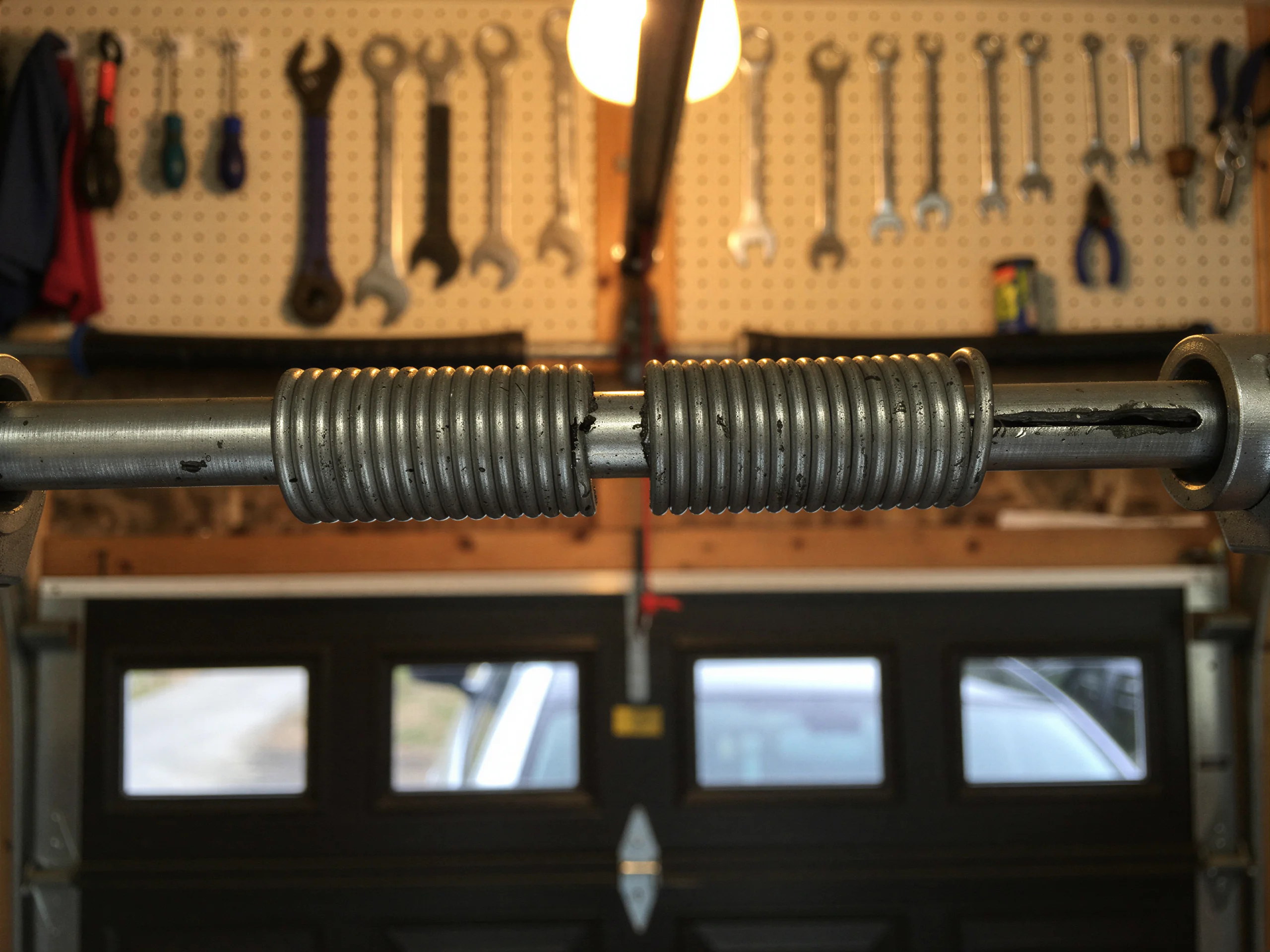
The new torsion spring gets sized to the actual weight of the door going in, not the old one - a heavier insulated panel needs more spring, and guessing low means a door that won't stay up on its own.
Rollers, cable, and bottom bracket all get replaced as a set rather than mixed with old hardware, since mismatched wear is one of the more common callbacks we see.
Opener travel and force settings get reset last, once the door is hung and balanced, so the safety reverse is reading the new door's weight correctly and not the old one's.
Pricing
We're not going to put a number here that isn't backed by a real quote, because the spread between a bare steel single door and an insulated double with a quieter track is wide enough that a flat figure would be misleading either way. What drives the cost on a Howard install is mostly size - single versus double - and insulation level, since the severe-cold standard this region sits under pushes more owners toward a higher R-value panel than you'd see in a milder climate. Howard's median household income runs a bit under the wider service area's $96,607, and that shows up less in what people choose and more in how long they wait before replacing instead of patching an aging 1990s door. Either way, get the actual door and track specced before comparing numbers - two quotes for 'a double garage door' can be two very different products.
Questions
Not automatically. If the springs, track, or opener have failed but the panels are still square and the foam core hasn't separated from the skin, a repair can be the right call. Replacement makes more sense once the panels themselves are warped, dented, or losing insulation value - that's a door problem, not a hardware problem.
Usually yes on Howard's housing stock, since most of it dates to the 1980s and 90s and the framing tends to be standard width and square. Headroom for the spring mount is the thing most likely to need adjusting if you're moving up to a thicker insulated panel.
This area sits in a severe cold climate band, so an insulated panel does more work here than it would somewhere milder - less condensation on the inside skin, less cold radiating into an attached garage. It's not required, but it's worth weighing against a bare steel door if the garage shares a wall with living space.
Explore more
Ready when you are
Green Bay Garage Door Co repairs and installs garage doors, springs and openers in Green Bay, WI and the surrounding area.