
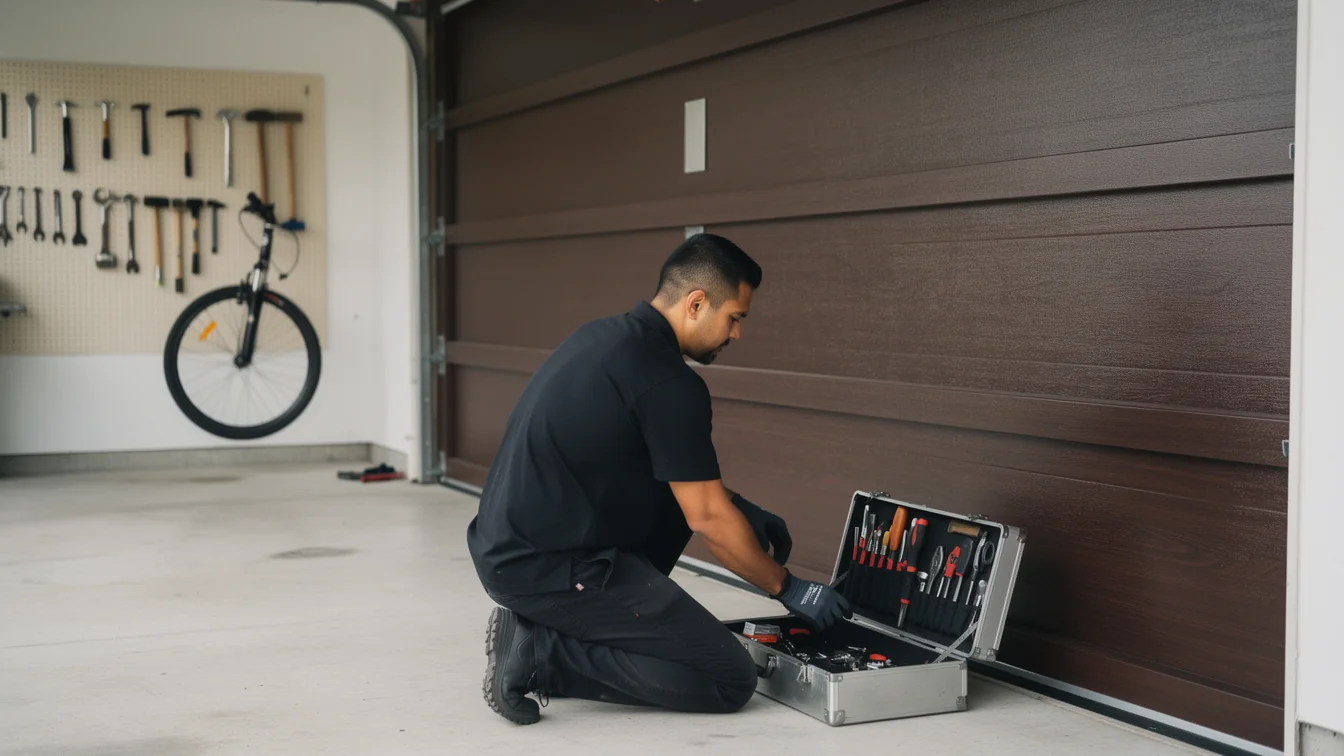
 What Actually Happens When You Call Us in Green Bay
A clear look at what happens when a tech comes to your Green Bay home, from diagnosis to parts, built around this area's 1960s-2000s housing stock and cold winters.
What That Grinding, Popping, or Slapping Sound Is Telling You
A grinding, popping, or slapping garage door in a Green Bay-area home built between 1962 and 2008 usually means worn hardware reaching the end of its rated life, not a mystery.
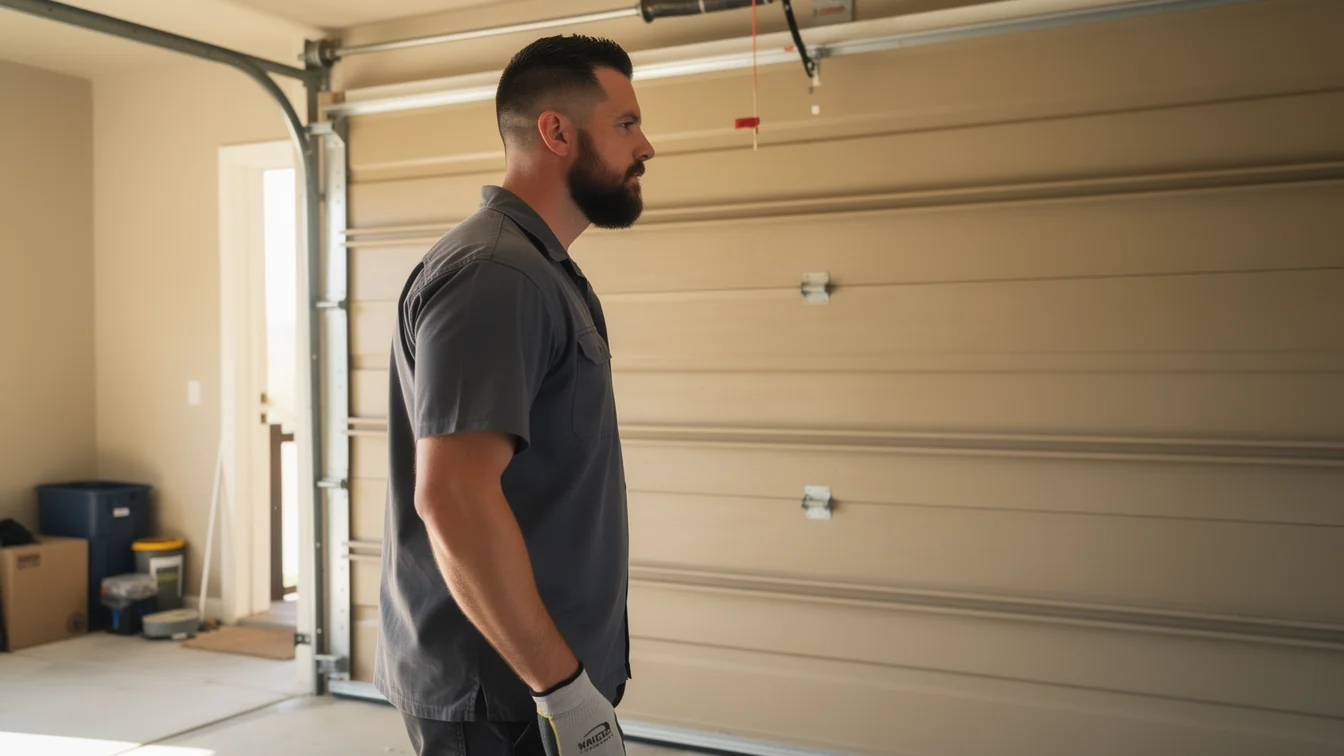
Local detail
What Is Going On
Most of the houses across this part of Wisconsin went up between 1962 and 2008, with the median build year landing at 1985. That means a big share of the springs and openers in this region are the originals, or the first replacement, put in sometime in the 90s and never touched since. A torsion spring is good for roughly 10,000 open-close cycles. Run the math on a door cycled twice a day since the mid-80s and you land right where a lot of owners are now: a spring that isn't broken yet, but close enough that it's started talking about it.
Across the 27 named communities that make up this service area, the dominant housing stock is still that same 1980s-to-90s build - Allouez, Bellevue, Howard, Ashwaubenon, and the rest all share roughly the same age profile. That's not a coincidence of style, it's a coincidence of when this part of the county got built out. So the pop you hear when the door starts up, or the slap when it reverses, isn't random. It's the predictable sound of hardware reaching the end of a life span that was set the day it was hung.
The area
What You Pay
What a repair costs here comes down to what's actually failing, not what it sounds like from inside the kitchen. A worn roller slapping in the track is a different job than a cable starting to fray at the drum, even though both can sound like something's about to let go. We don't have a flat number to hand you, because the fix for a 1985-build door with original hardware is rarely the same fix as a 2005-build door with a newer opener bolted on.
With a median household income of $96,607 across this service area, most owners we talk to aren't choosing a repair on price alone - they're weighing whether it makes sense to keep feeding parts into a system that's already thirty-plus years old. Sometimes it does. A cable, a roller set, a sensor - those are cheap relative to the door. A full opener on a unit from the 80s, less so. We'll tell you straight when a part isn't worth sourcing for something that old; we'd rather say that than sell you a patch job twice.
What we find
When to Get Help
Some noises can wait a week. Some can't wait the afternoon. A rhythmic squeak on the way up is usually just a roller or hinge wanting lubricant - annoying, not dangerous. A loud bang followed by the door going dead quiet is almost always a spring letting go, and that's not a DIY fix; torsion springs are under enough tension to break a bone, which is also why we won't walk you through replacing one over the phone.
A grinding noise coming from the opener motor itself, as opposed to the track, often means the gear kit inside is stripped. On a unit already pushing fifteen or twenty years, that's a repair that doesn't always make sense - replacing the opener outright is usually the better call, and we'll say so rather than bill you for a gear kit on a motor that's on its way out anyway. If the door is dragging unevenly on one side, stop opening it. That's a cable or track problem, and running it anyway usually turns a repair into a replacement.
How we work
What the Weather Here Does to It
This region sits in a severe cold climate band, and that matters more to a garage door than most people expect. Steel contracts in sub-zero mornings enough that a track bolted true in July can bind in January - the door still opens, but it fights the rollers the whole way, and that fight is what you're hearing. Lubricant that felt fine in September can stiffen into something closer to wax once temperatures drop hard, which is why a lot of the squeaking and groaning calls cluster in the coldest stretch of winter rather than spreading evenly across the year.
Ground movement plays a part too. A house in Allouez, four miles from here, deals with the same frost heave under its slab as one in Bellevue or Howard a few miles further out - the concrete shifts a little each winter and settles back a little each spring, and over a few decades that's enough to throw a track out of plumb even on a door that's otherwise sound. None of that means something's broken. It means the hardware is working harder than it was asked to when it went in.
Questions
Common questions
Why does my garage door only make noise in the morning?
Cold steel and stiff lubricant. In a severe cold climate band like this one, overnight temperatures can leave the track slightly contracted and the grease in the rollers thicker than it is by afternoon. The door loosens up as it warms. If the noise disappears entirely by midday, it's usually weather, not a failing part - though it's worth watching over a season.
Is a loud bang always a broken spring?
Almost always, yes, especially on a door that won't open afterward or feels far heavier than normal when you try to lift it by hand. Torsion springs hold a lot of tension and failing suddenly is how they fail. Don't try to open the door further or remove the spring yourself - that's a job for a tech with the right bars and clamps.
My door is original to a house built in the 80s - is it worth repairing?
Depends what's wrong with it. A roller, cable, or sensor is usually worth fixing on any door. A dying opener motor on original 80s hardware is a closer call, since newer openers run quieter and safer. We'll look at the specific part before telling you to replace instead of repair - we're not going to default to the bigger job.
Recommendation
You Might Also Like
More garage door guides for Green Bay homeowners.
What Actually Happens When You Call Us in Green Bay
A clear look at what happens when a tech comes to your Green Bay home, from diagnosis to parts, built around this area's 1960s-2000s housing stock and cold winters.
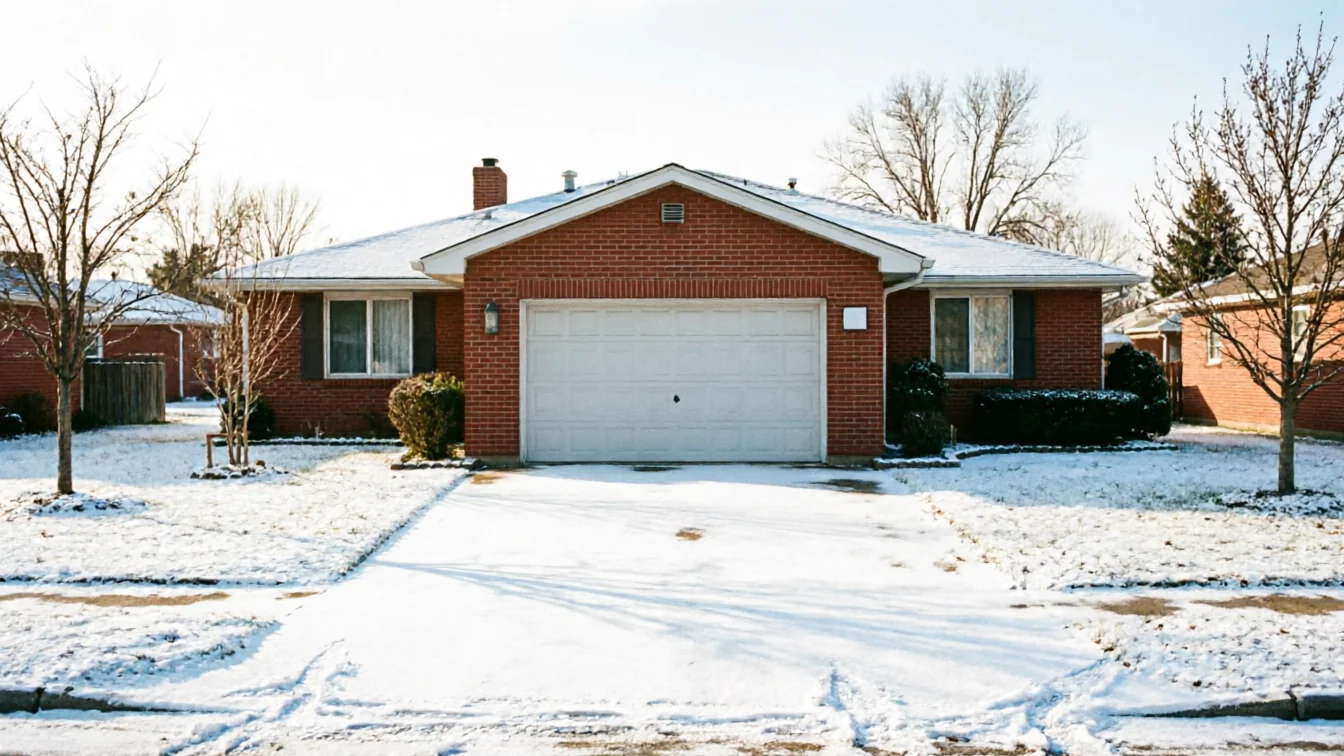 Why Green Bay Garage Doors Break the Way They Do
Green Bay homes mostly date 1962-2008 with hardware built for a cold severe climate.
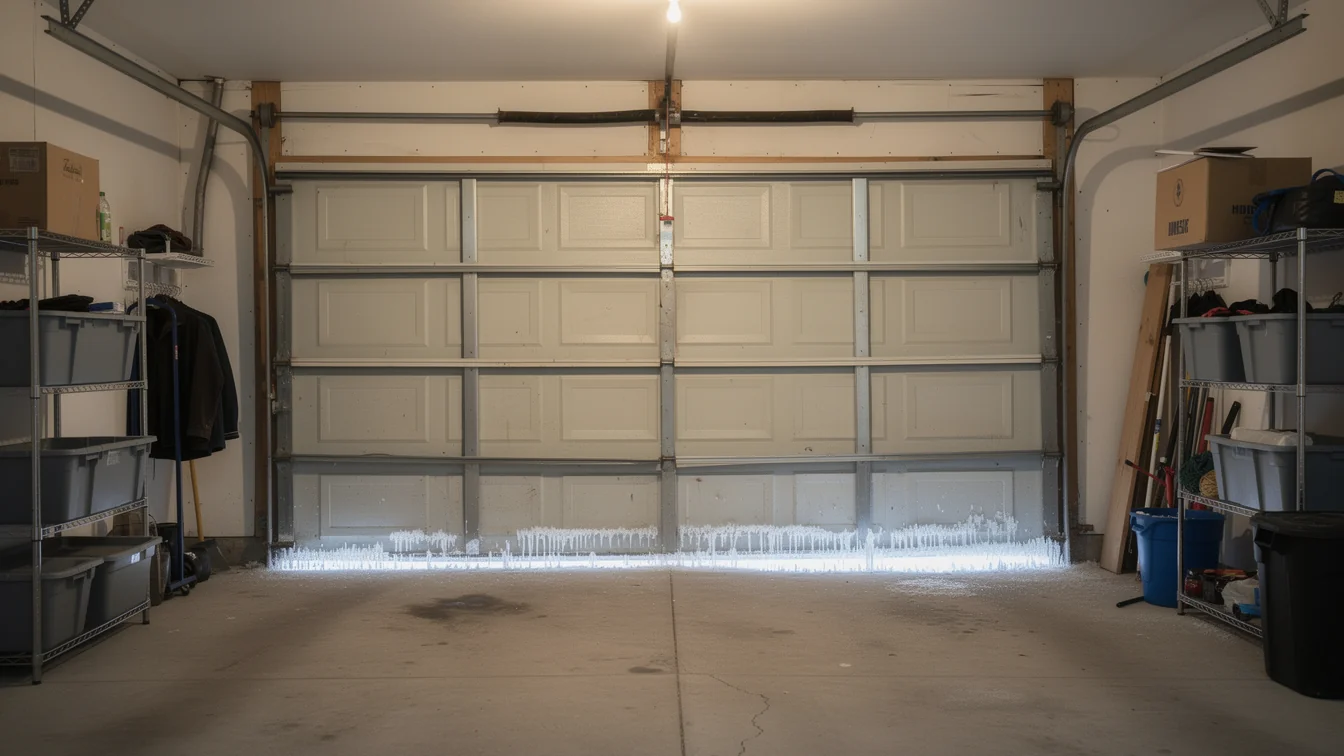 What Winter and Older Housing Stock Do to Garage Doors in Green Bay
Green Bay homes built 1962-2008 face severe cold winters that strain garage springs and openers.
Ready when you are
Need a garage door sorted in Green Bay?
Green Bay Garage Door Co repairs and installs garage doors, springs and openers in Green Bay, WI and the surrounding area.