
Single-visit typical timeline
A straightforward spring replacement or cable job on a 1990s-era door is usually a single visit, start to finish. Where it stretches is when the opener itself has to come out.
Howard, Green Bay
Howard homes mostly date to the 1990s build boom - original torsion springs and early chain-drive openers are reaching end of life. Repair service from Green Bay, 5 miles out.
Warning signs
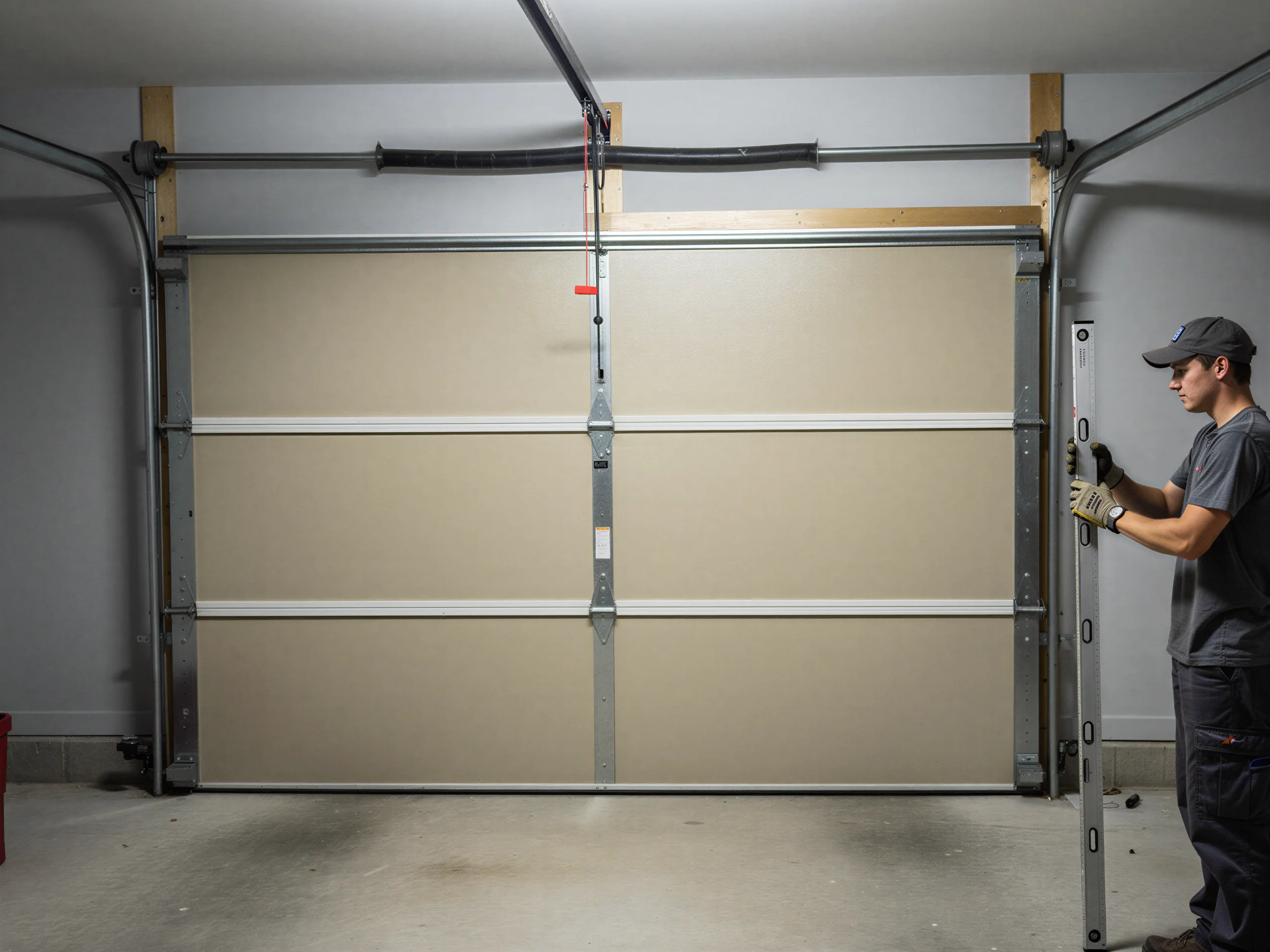
The call we get most from Howard is a door that won't move, or one that lurches and bangs on the way up. Most of Howard's houses went up during the 1990s growth years, median build year 1994, which means the garage doors and openers in this part of the service area are mostly original or close to it. That's a steel sectional door on torsion springs, paired with an early chain-drive opener - not the belt-drive, battery-backup units going into new construction now.
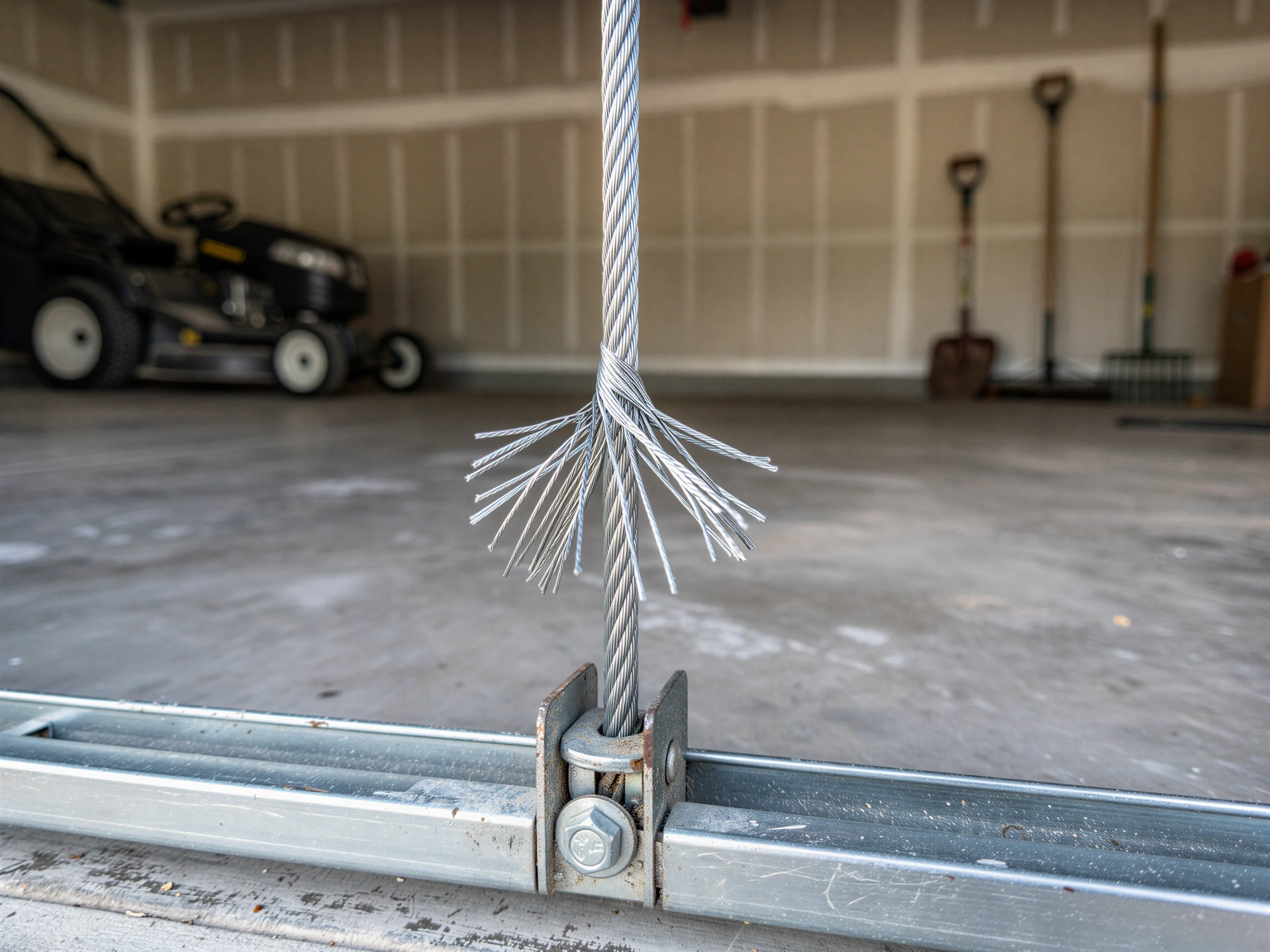
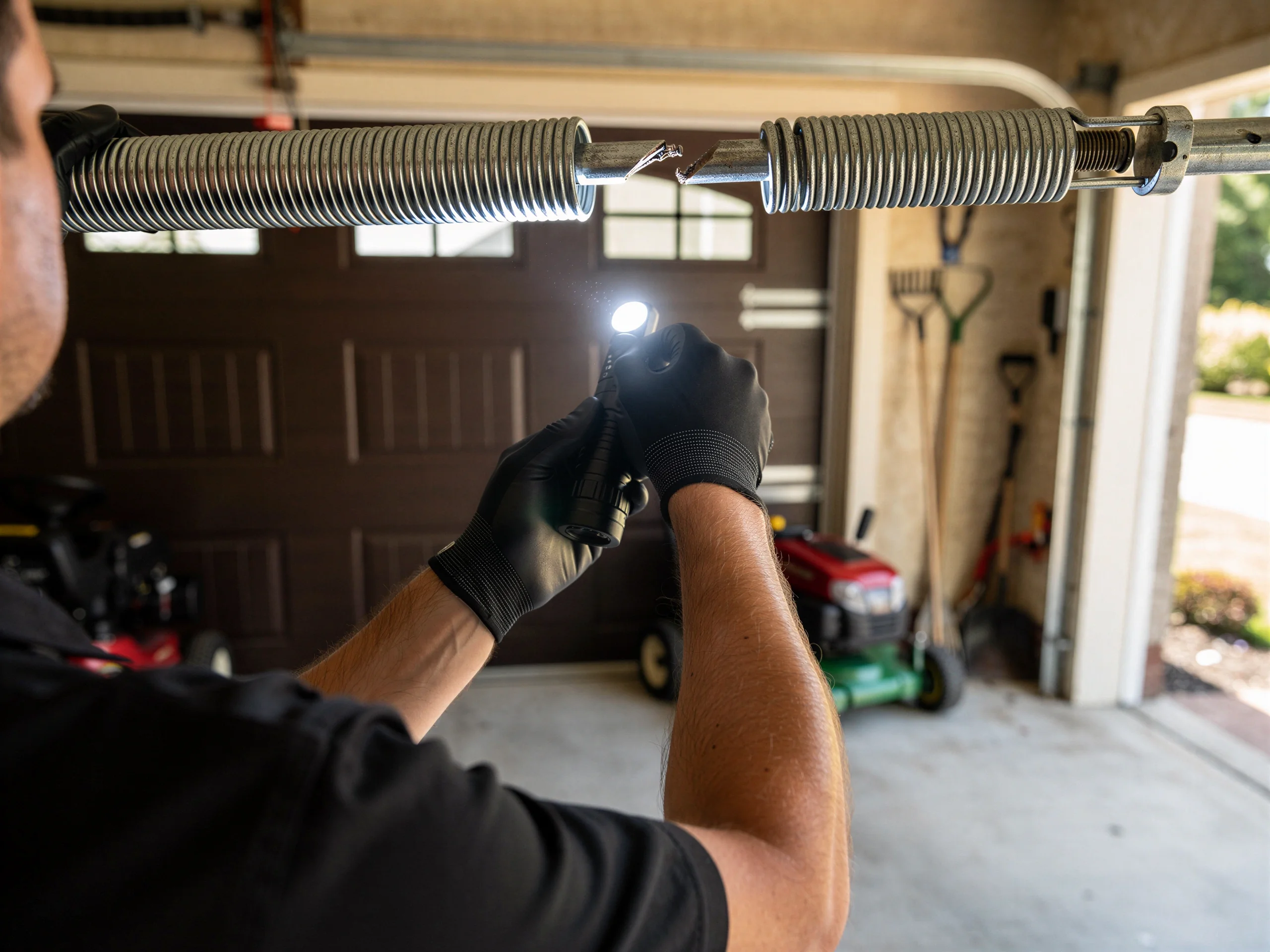
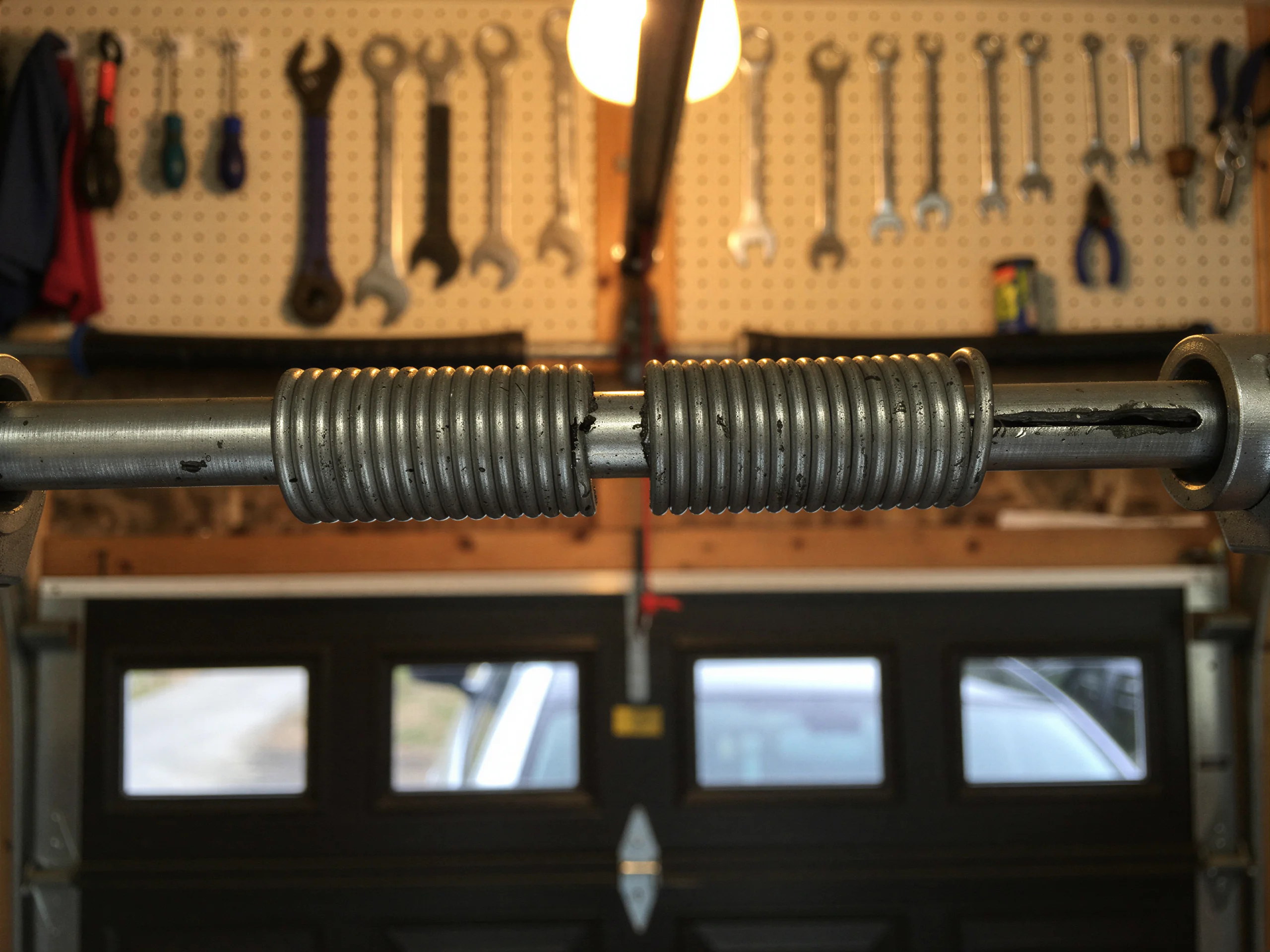
At that age the common fault isn't cosmetic, it's mechanical: a torsion spring that's done its last cycle and snaps, usually on a cold morning when the steel is stiff. Right behind that is a cable fraying at the drum, or rollers that have worn oval and started binding in the track. Opener failures in this vintage are often the drive gear stripping inside the housing, not the motor itself - a $20 part that looks like a dead opener until someone opens the case.
Timing
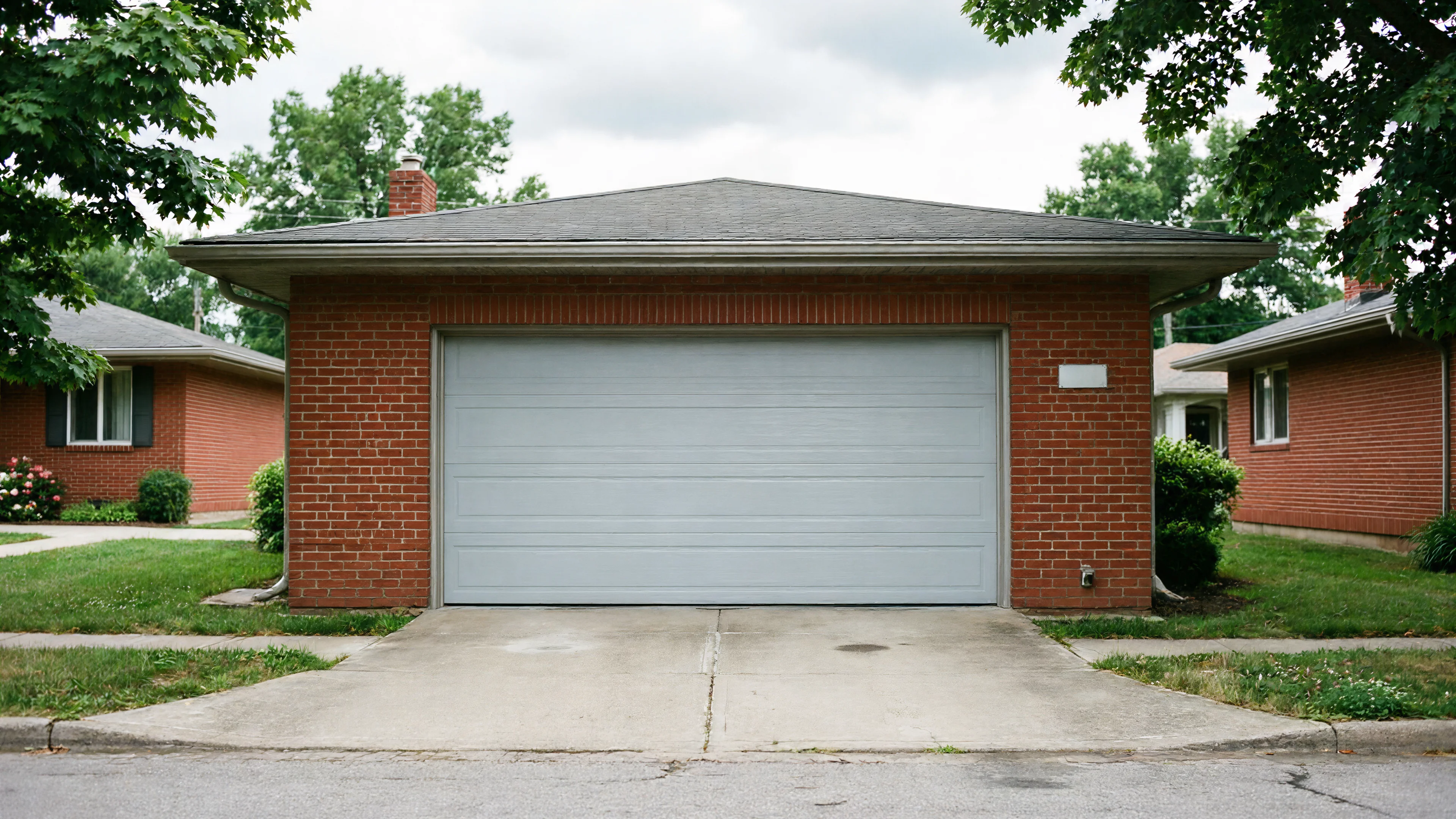
We run the truck out from Green Bay, about 5 miles to Howard, so there's no local depot or branch to factor in - just that short drive, which keeps the job timeline close to what you'd see on a same-day Green Bay call.
A straightforward spring replacement or cable job on a 1990s-era door is usually a single visit, start to finish. Where it stretches is when the opener itself has to come out.
A gear-and-sprocket kit for an older chain-drive unit isn't always on the truck - sometimes it's a next-day part. We'll tell you on site whether we're finishing that afternoon or coming back.
Watch-outs
This part of Wisconsin sits in a cold-severe climate band, and that matters more on 1990s doors than newer ones. The weatherstripping and the old-style foam-core panels common on that era of door don't insulate like current product, and the steel itself contracts enough in deep cold to change how a marginal spring or a slightly bent track behaves. A spring that's been creaking along all fall will often go in the first hard cold snap, not before.
The other complication is parts matching. A torsion spring has to be wound to the door's exact weight and drum size - guess wrong on a 30-year-old door and you get a door that slams down or won't stay up. We measure on site rather than quoting a spring size over the phone.
One honest limit: if the door itself is warped, rusted through at the bottom panel, or the track is bent from an old impact, we'll say so rather than bolt a new spring onto a door that's not worth saving.
The repair
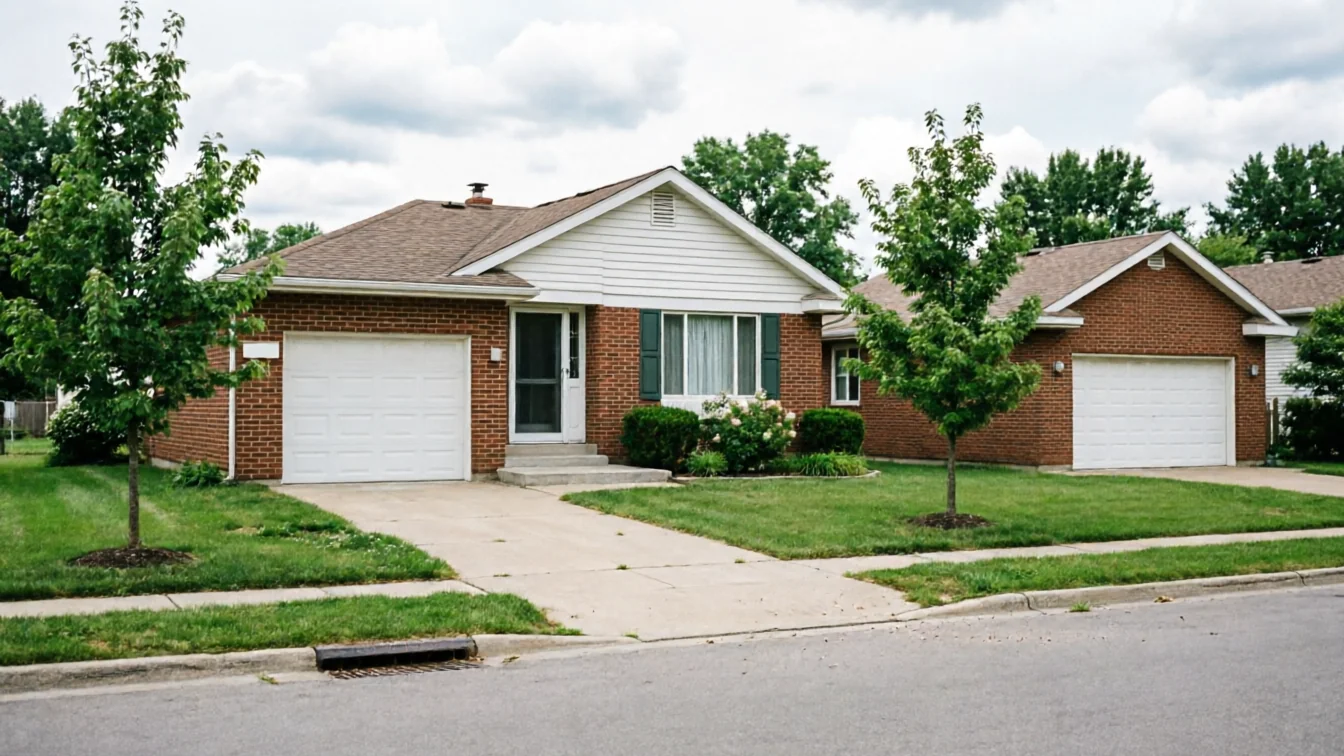
For the typical Howard job - broken torsion spring, worn rollers, a slipping cable - the work is mechanical, not custom.
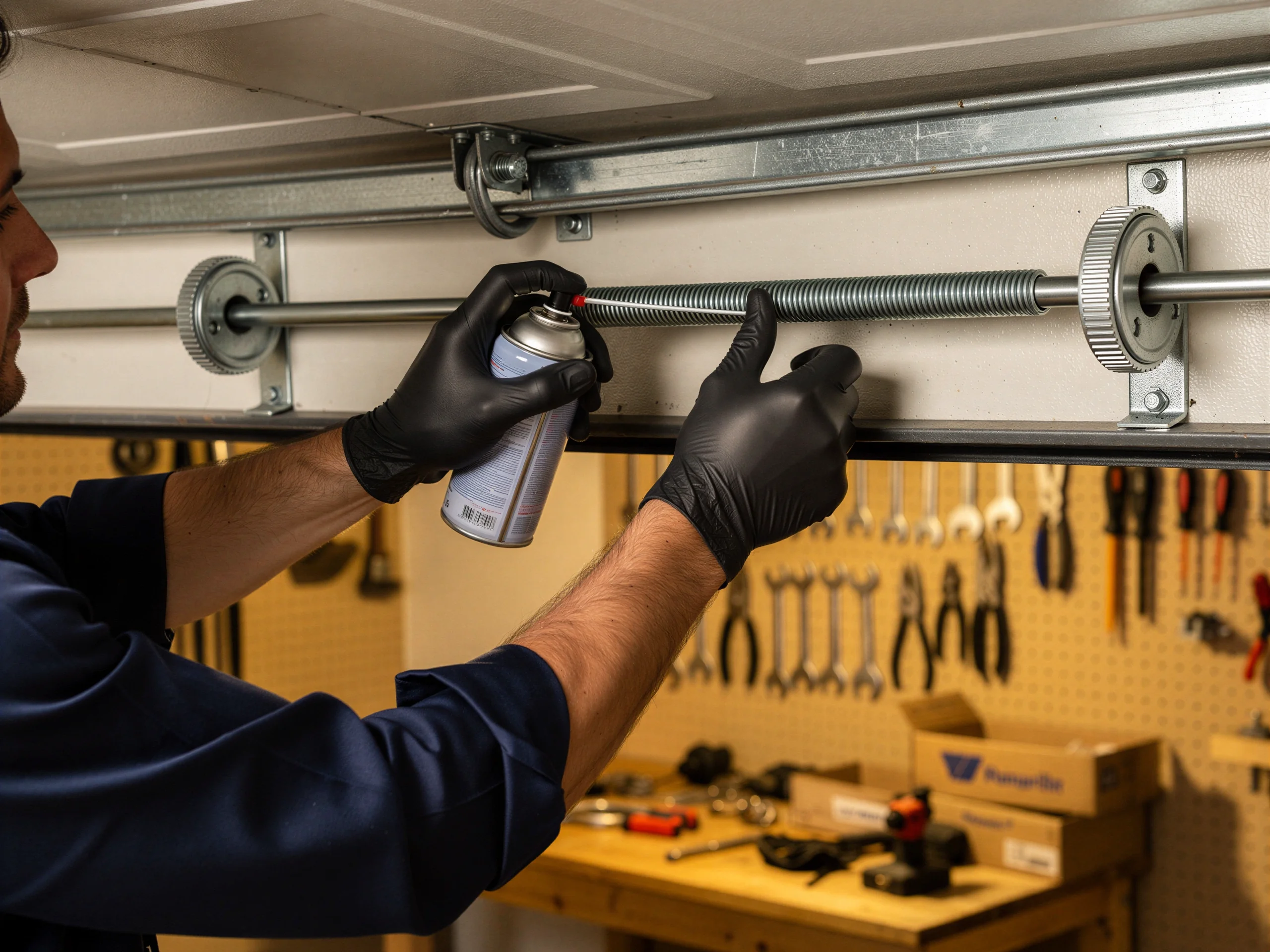
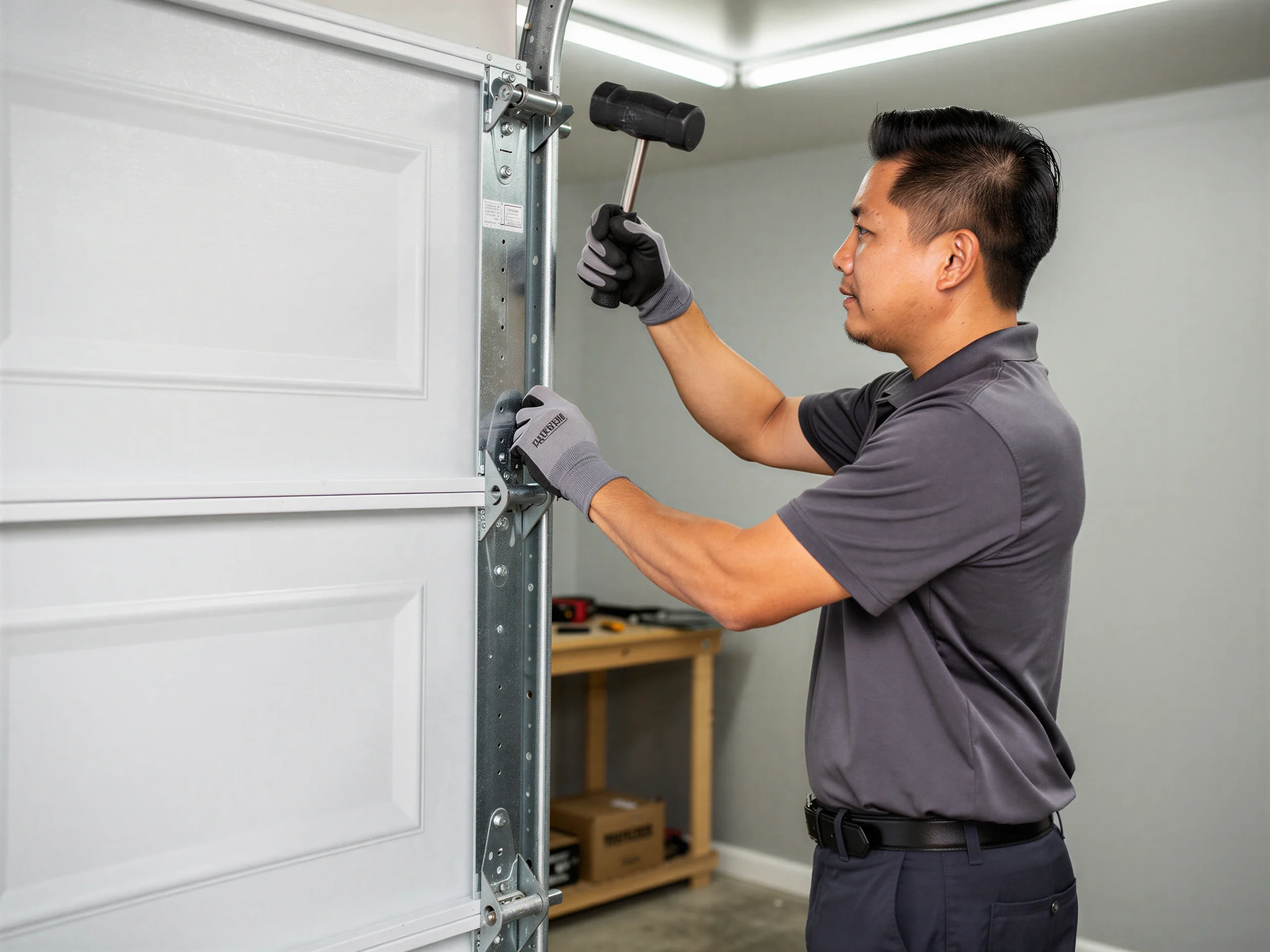
We pull the old spring under control, size and install the replacement to the door's actual weight, swap any rollers that have gone oval, and run the door through a full cycle to check balance. On the opener side, if it's the drive gear or sprocket, that's a teardown-and-rebuild on the unit rather than a swap.
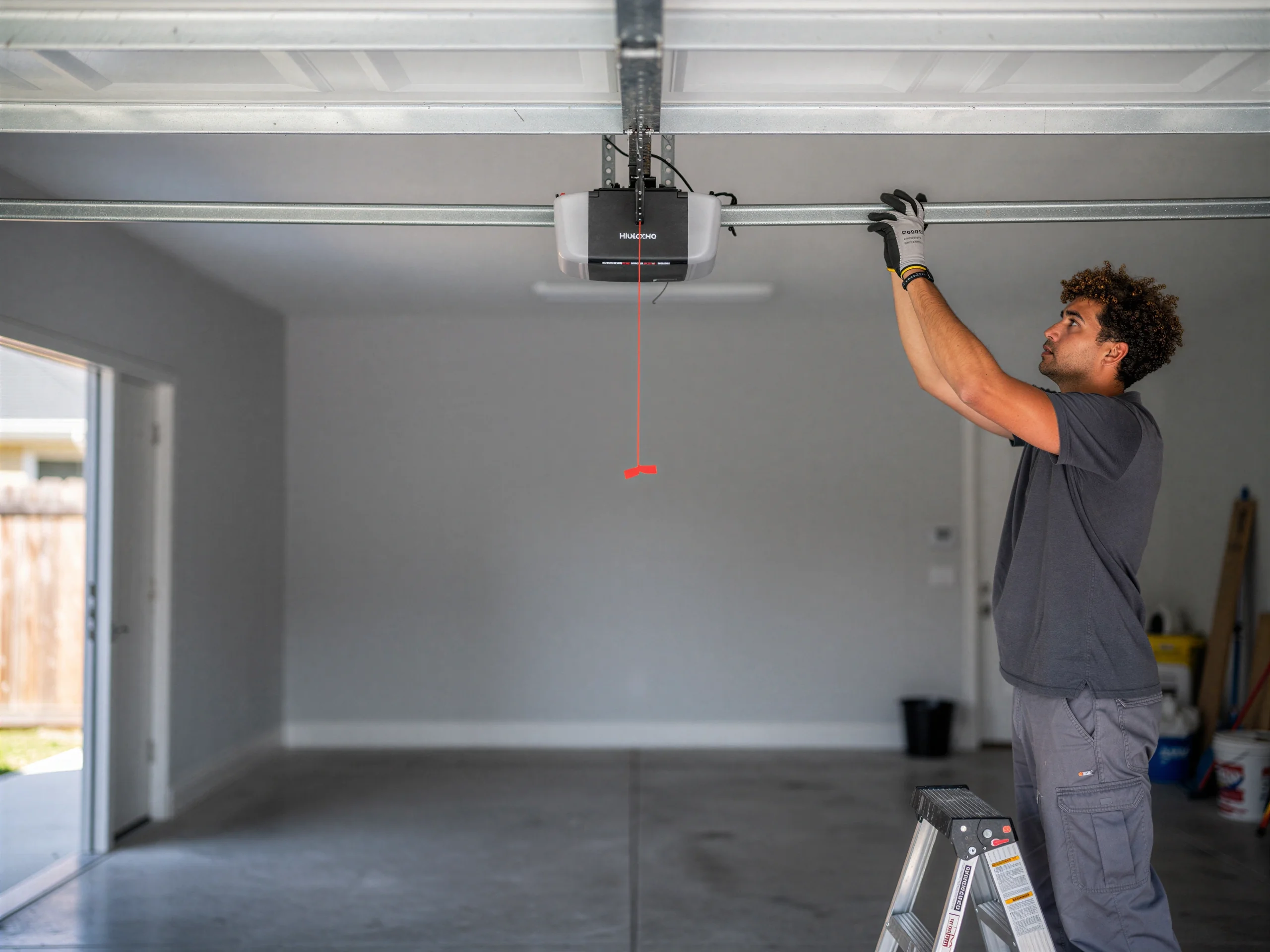
We don't default to replacing a whole opener just because it's old - a 1990s chain-drive unit with a stripped gear is usually worth repairing rather than tossing, as long as the motor and logic board are sound. If the motor's gone, that's a different conversation.
Pricing
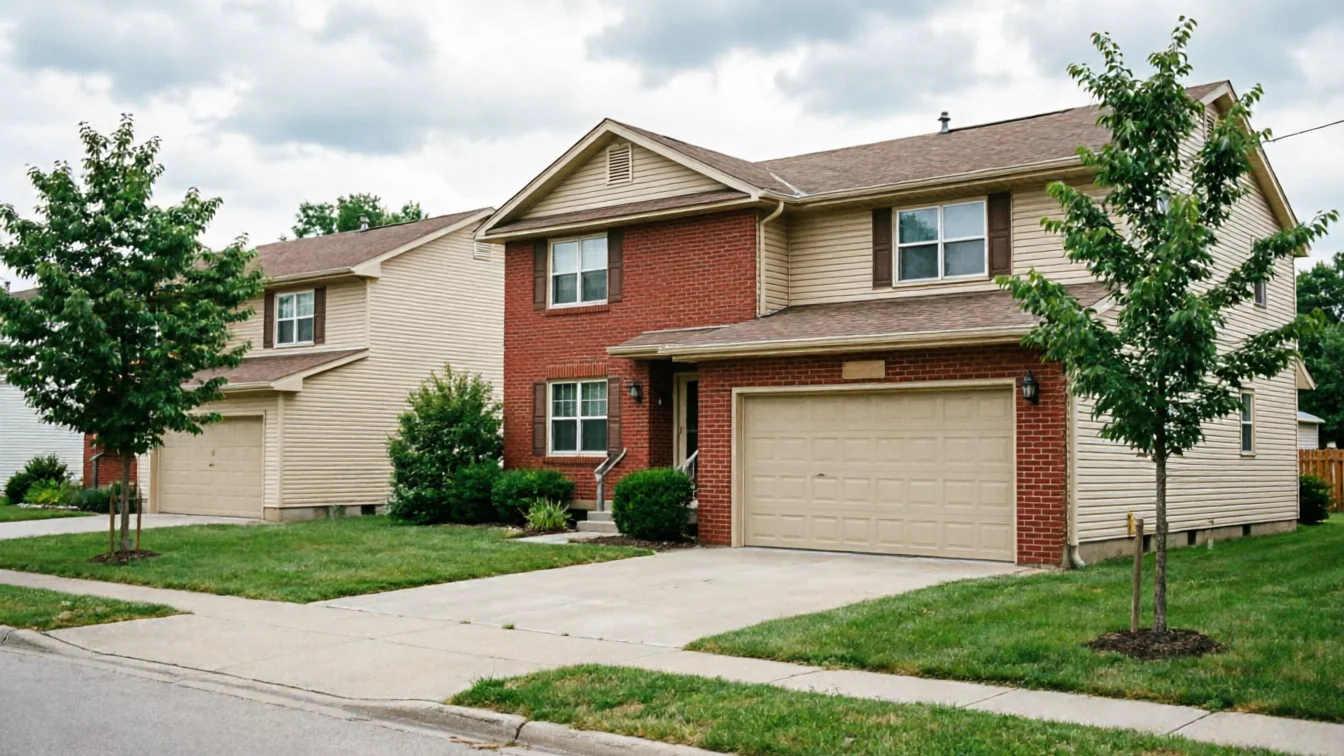
We don't post a flat price here because spring sizing and opener condition vary door to door, and guessing at a number before we've seen the hardware isn't honest pricing. What we can say is that Howard's median household income runs around $84,896, somewhat below the $96,607 median across the broader Green Bay service area, and the jobs we see here tend to be standard spring and roller repairs rather than full door replacements - which keeps most calls on the lower end of what a repair runs.
We'll give you a firm number on site before any work starts, not an estimate that changes once the truck's in the driveway.
Questions
Most houses here were built in the early-to-mid 1990s, median year 1994, so a big share of the original torsion springs and openers are all reaching the end of their working life around the same stretch of years. It's less coincidence than a neighborhood built in one wave aging in one wave.
Yes. Howard sits in a cold-severe climate band, and steel springs get stiffer and more brittle in deep cold. A spring that's already near the end of its life is far more likely to snap on a sub-zero morning than in warm weather.
No - we run jobs out from Green Bay, about 5 miles away. There's no separate Howard branch, just a short drive that keeps response times close to what Green Bay customers see.
If it's an early chain-drive unit from the 1990s build era and the problem is a stripped drive gear or sprocket, repair usually makes sense - the motor and control board often outlast the gearing. If the motor itself has failed, replacement is the more sensible call.
Explore more
Ready when you are
Green Bay Garage Door Co repairs and installs garage doors, springs and openers in Green Bay, WI and the surrounding area.