
Extension spring pulleys
Extension spring setups on older doors take a bit more care because the pulleys and safety cables often need attention at the same time. Cold weather adds time too.
Green Bay, WI
Torsion spring snapped on your Green Bay garage door? We fix springs built for 1962-2008 housing stock in a severe cold climate, serving the whole area.
Timing
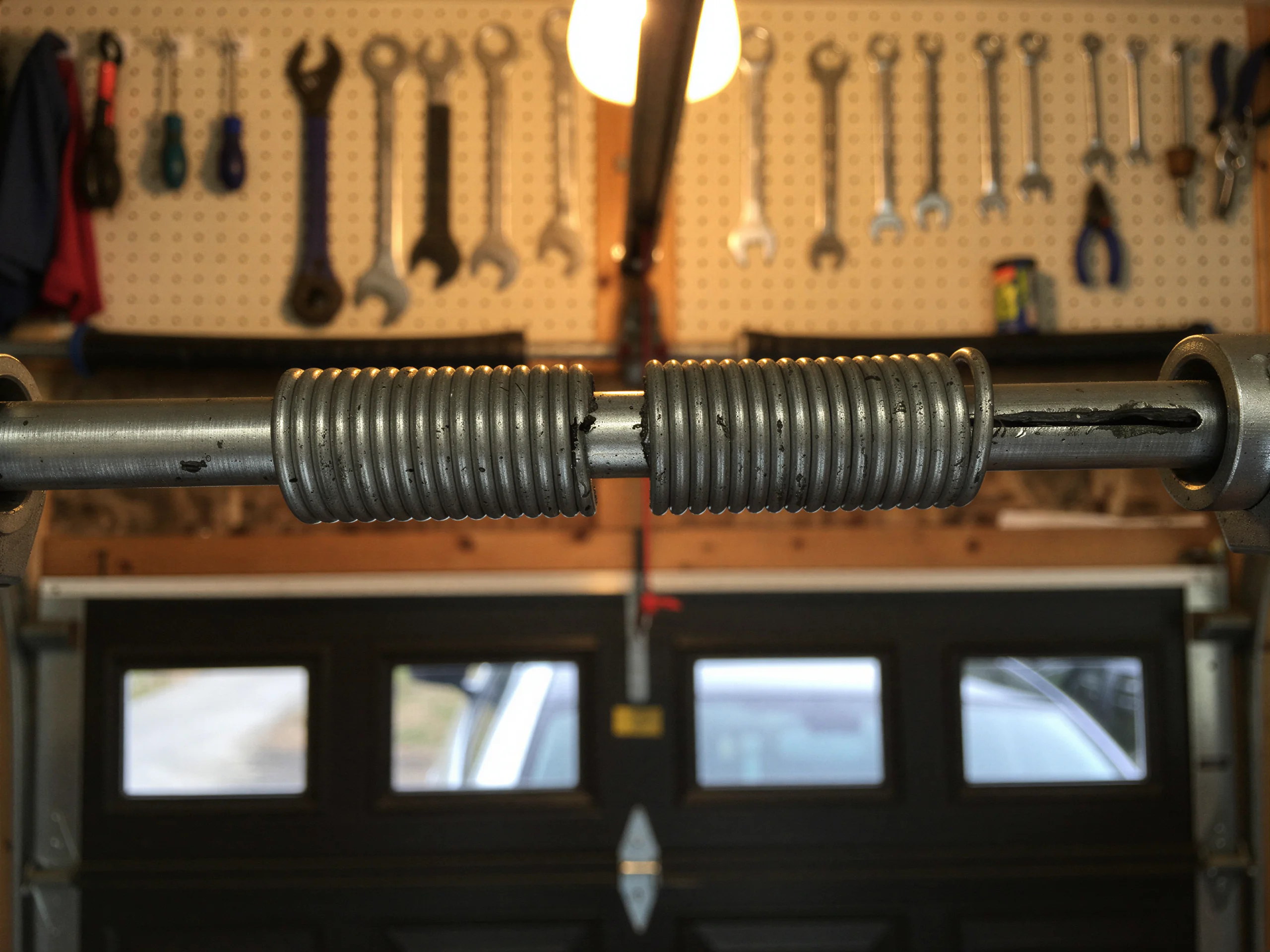
A spring job isn't an all-day affair, but how long it takes depends on what's actually broken and what's behind it. If it's a single torsion spring on a door installed sometime in the 1980s or 90s - which describes most of the housing stock across this service area - the fix is usually a straight swap: pull the old spring off the shaft, size the new one to the door weight, wind it to the right turns, test the balance.
Extension spring setups on older doors take a bit more care because the pulleys and safety cables often need attention at the same time. Cold weather adds time too.
When steel is stiff from sub-zero mornings, winding a spring to correct tension takes more patience, and we check the cable drums and end bearings while we're in there since cold makes brittle parts worse.
We don't quote a fixed number of minutes because no two doors are identical, but we do replace both springs on a double-spring setup even if only one broke - the other is usually close behind, and reopening the header twice costs you more than doing it once.
Warning signs
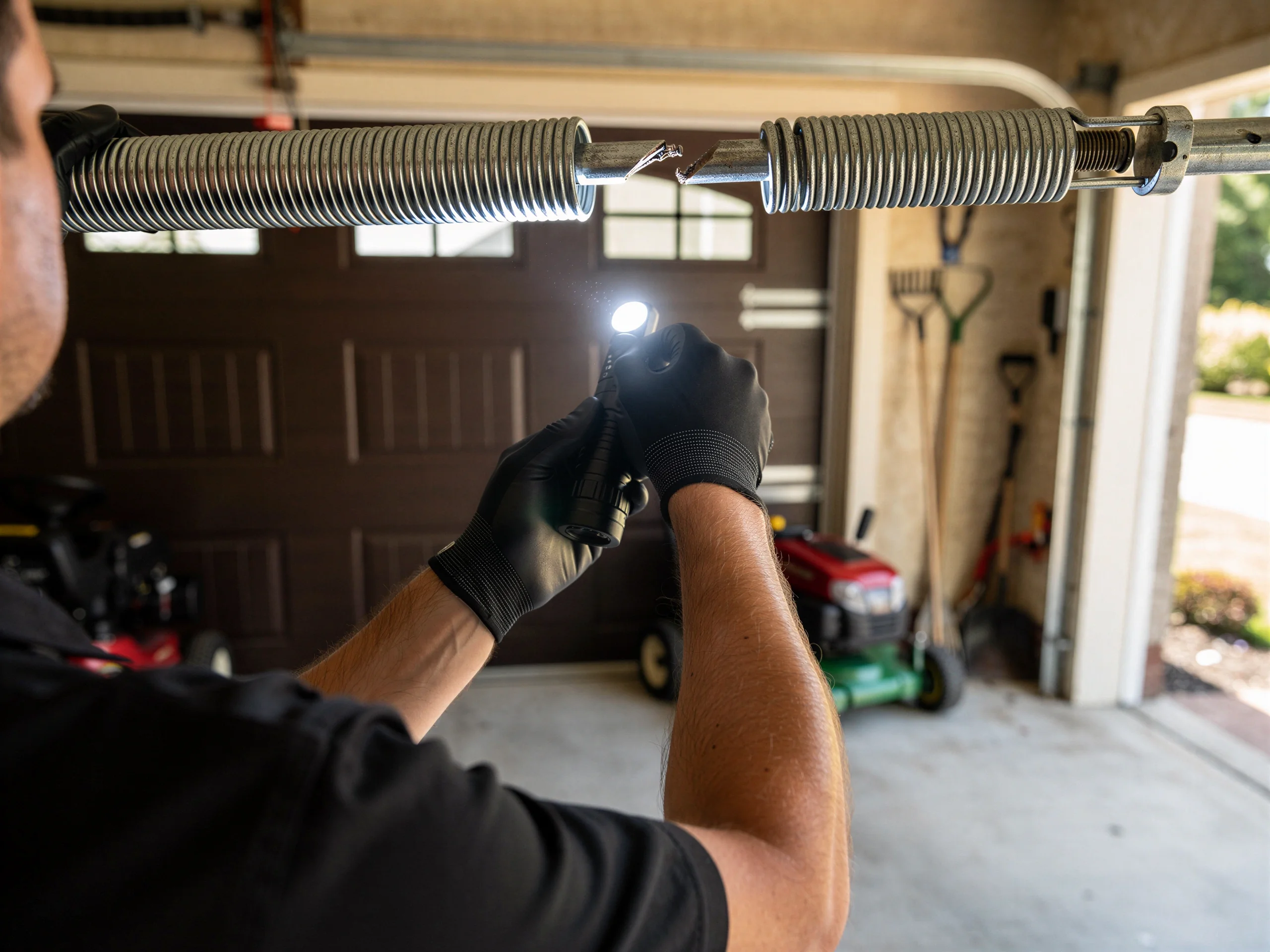
Most owners don't notice a spring going bad until it's already gone. The door gets heavy to lift by hand, or the opener strains and reverses partway up, or you hear a loud bang from the garage - that's the spring letting go, usually on a cold morning when the steel's at its stiffest.
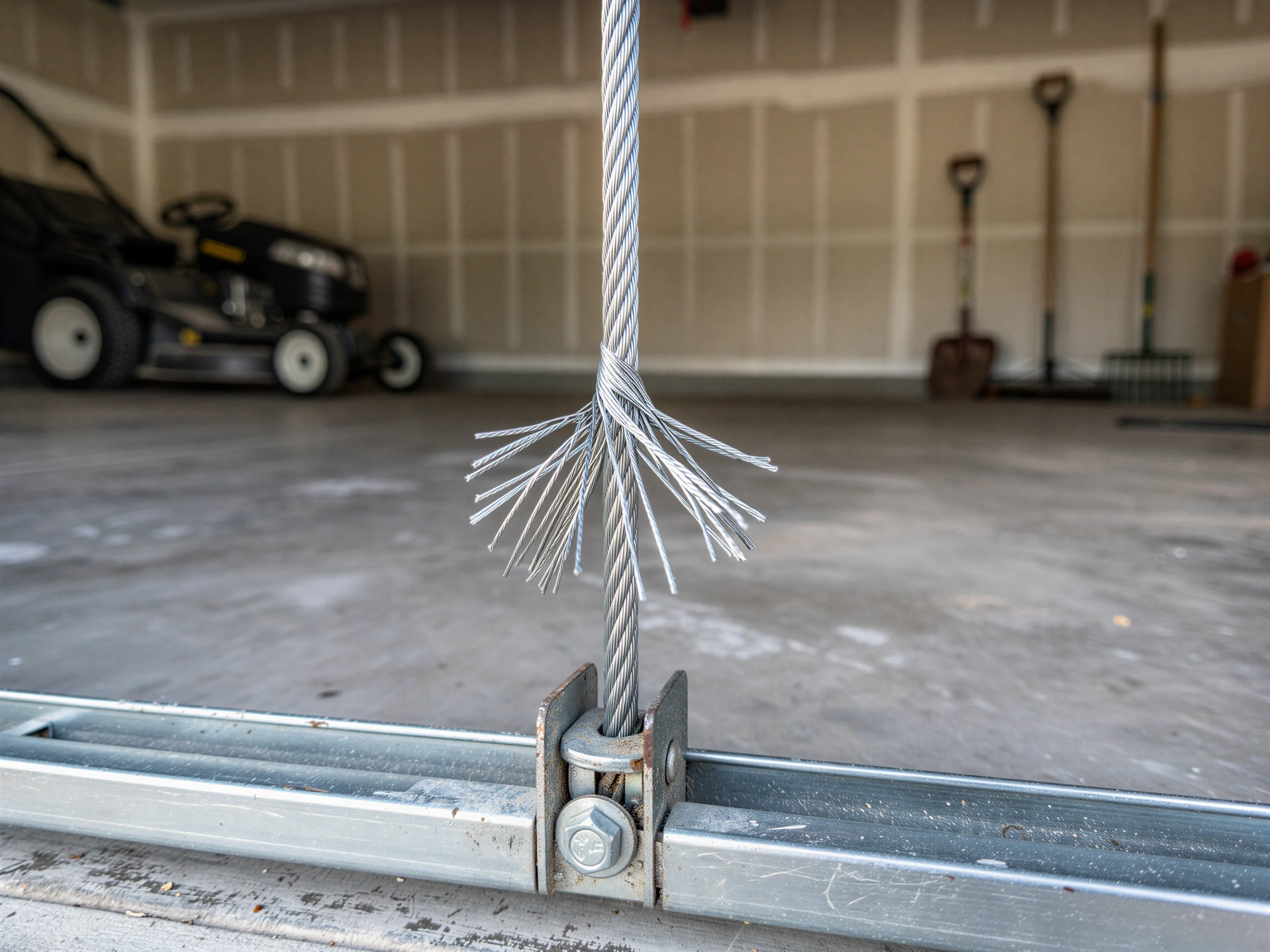
Sometimes it's quieter: the door looks crooked on the track, hanging a few inches lower on one side, because one spring is still holding and the other isn't. On older extension-spring doors from the 1960s-80s wave of construction, the first sign can be a frayed or snapped safety cable rather than the spring itself.
If your opener motor sounds like it's working twice as hard as it used to, or the door won't stay open on its own when disconnected from the opener, the spring has lost tension even if it hasn't broken outright.
None of these are something to wait out - a door running on a dead or half-dead spring puts more load on the opener gears and the track rollers, and that turns a spring call into a bigger one.
Local causes
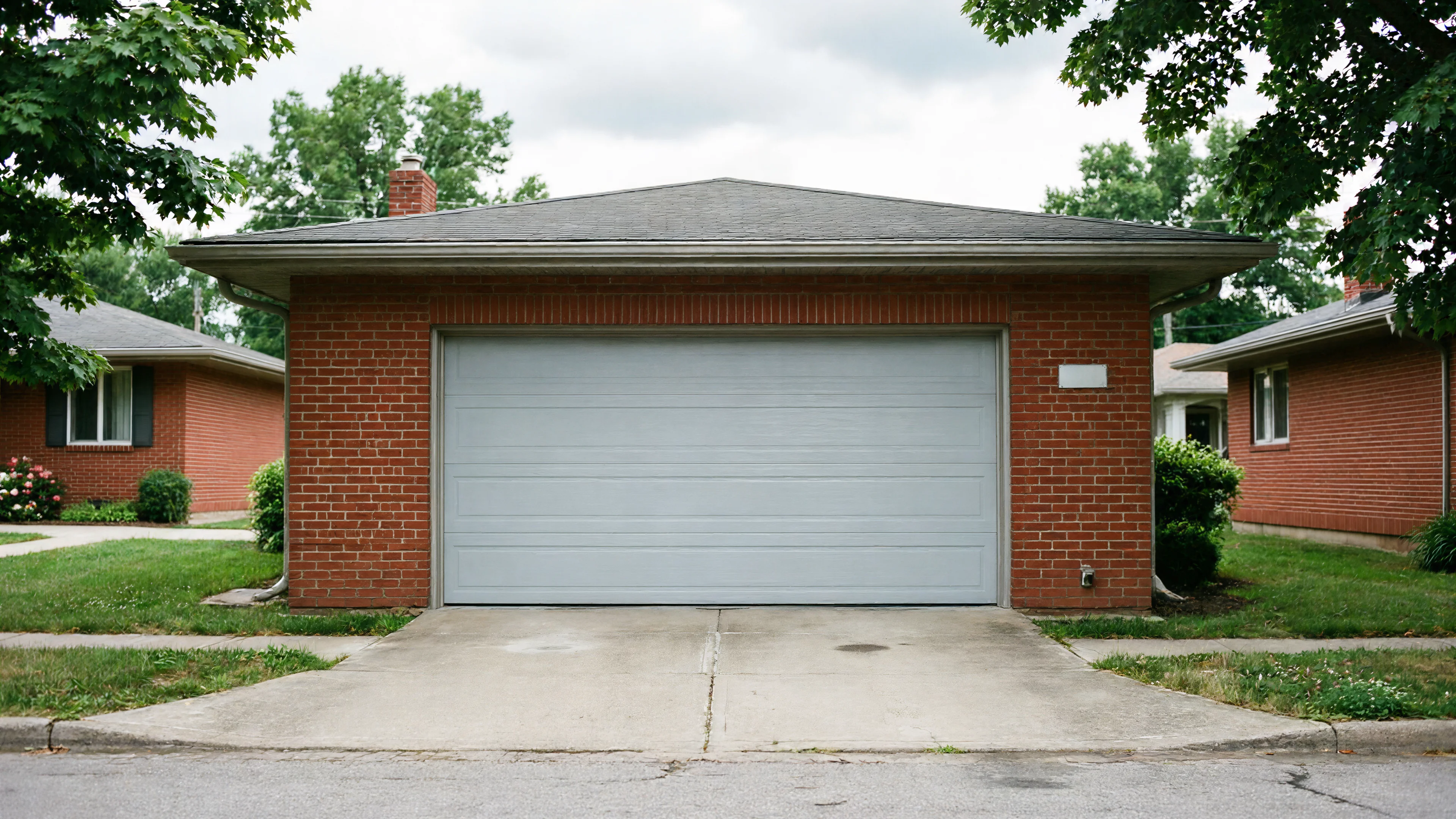
The housing across this service area was mostly built between 1962 and 2008, with the typical home dating to 1985, and that era put torsion springs on steel shafts that were never rated for forty-plus years of daily cycling. A spring sized for a door in 1985 has had three to four decades of lift cycles by now, and steel fatigues whether or not anyone's paid attention to it. Layer on the climate: this area sits in a severe cold band, and repeated hard freezes shrink and stiffen the coil, which is exactly when a spring near the end of its life lets go - not in July, but on the first real cold snap of the season. Across the 27 named communities in this service area, that combination repeats itself because the building boom that put up most of these garages happened in roughly the same twenty-five year window. It's not that any one house is unusual. It's that a lot of doors here are carrying springs from the same era, under the same winters, and they're reaching the end of their wind count around the same time.
The repair
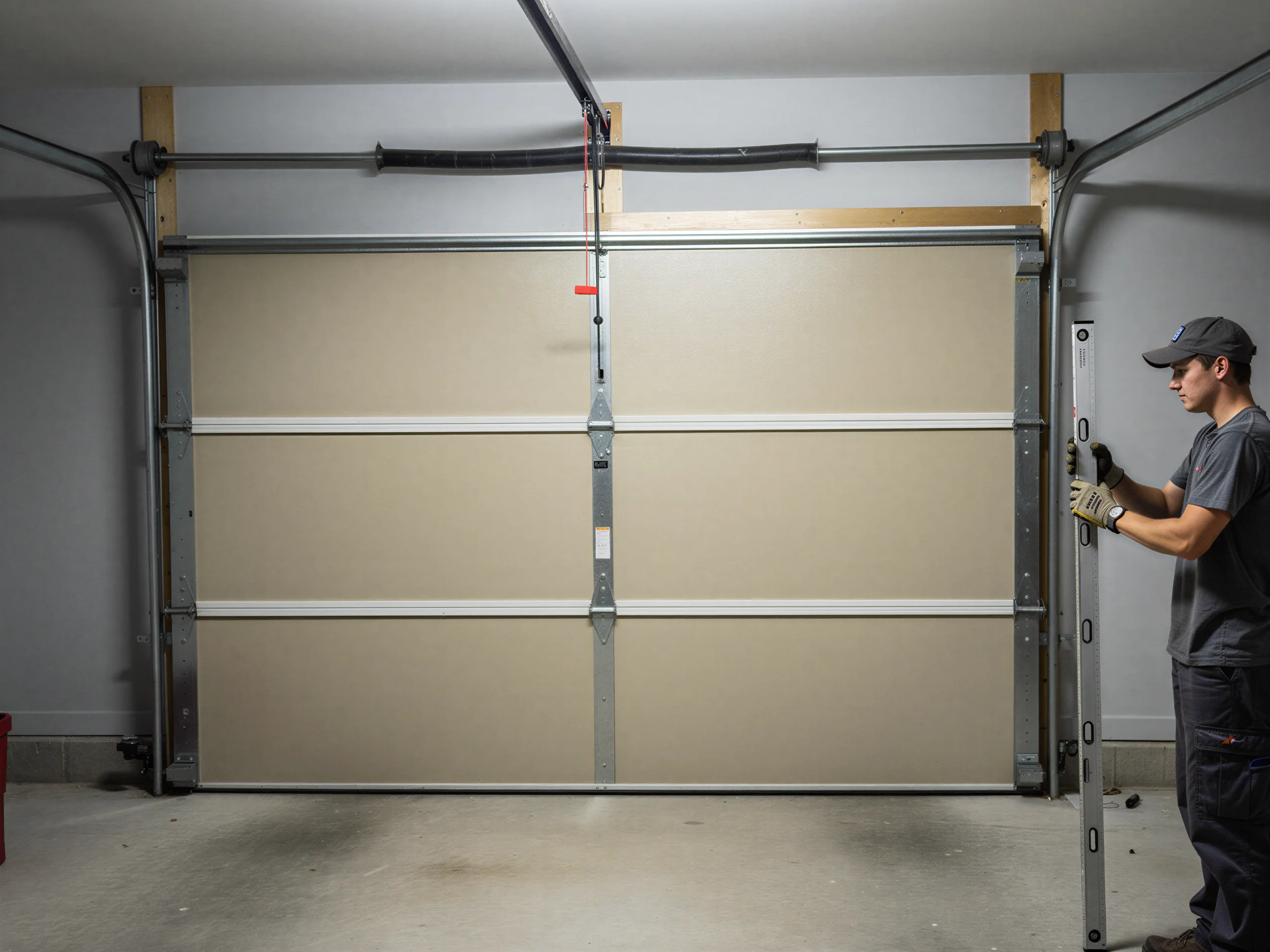
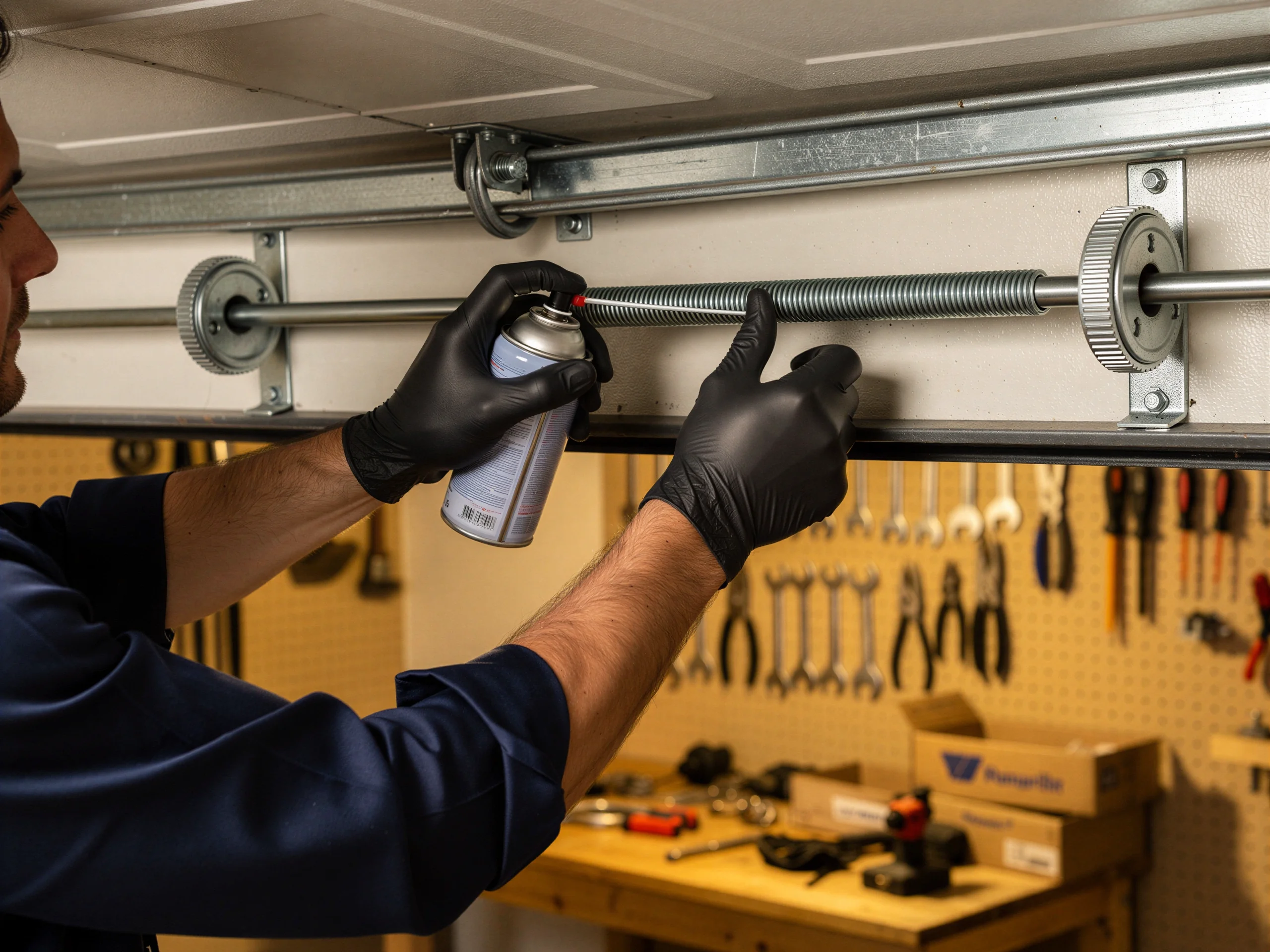
A proper spring repair starts with the shaft, not just the spring - a bent shaft or worn center bearing will chew through a new spring fast, so we check both before anything goes on.
We match the spring to the door's actual weight and the drum size already on the shaft, since swapping in the wrong wire gauge is how a door ends up unbalanced again within a year.
On double-spring doors we replace the pair together, even when only one has failed, because the surviving spring on a door this old is almost always close to its own wind-count limit. We also inspect the cables and end bearing plates while the shaft is exposed, since those parts take similar wear and cold stress.
One limitation worth saying plainly: if the shaft itself is bent or the drums are worn out of round, that's not a spring fix anymore - replacing those parts, or in some cases the door hardware as a whole, is the honest call rather than bolting a new spring onto bad bones.
Questions
If the door feels heavy when you lift it by hand with the opener disconnected, that's the spring, not the motor. A good spring holds most of the door's weight on its own. If it won't stay open partway, or drops on its own, the spring has lost tension even if it hasn't snapped yet.
On a double-spring door, both springs usually get wound and installed at the same time, so they've logged close to the same number of cycles. When one breaks, the other is typically near the same point in its life. Replacing just one often means a second call within months.
It's a factor, yes. Steel stiffens in sub-zero temperatures, and a spring already near the end of its wind count is more likely to fail under that added stress. That's why spring calls tend to cluster around the first hard freezes of the season rather than spreading evenly through the year.
We'd rather be straight with you: torsion springs are under heavy tension and winding one incorrectly can cause serious injury. We don't walk owners through DIY spring replacement for that reason - it's one job where the risk doesn't match the savings.
Explore more
Ready when you are
Green Bay Garage Door Co repairs and installs garage doors, springs and openers in Green Bay, WI and the surrounding area.