
 What Your Garage Door Is Up Against in Green Bay
Local info on garage door wear in Green Bay's 1962-2008 housing stock, severe cold winters, and what repair or replacement costs actually depend on here.
What Winter and Older Housing Stock Do to Garage Doors in Green Bay
Green Bay homes built 1962-2008 face severe cold winters that strain garage springs and openers. See what drives repair costs and timing in this climate.
Local detail
What Is Going On
Most of the houses we work on around Green Bay went up between 1962 and 2008, with the bulk clustered in the 1980s and 90s across the 27 named areas that make up this market - from Allouez and Bellevue a few miles out to Suamico and De Pere further north and south. That means the garage door and opener on a lot of these houses is itself pushing thirty to forty years old. Springs sag, opener gears strip, and the steel tracks on doors from that era were never built with the thermal breaks you see in newer stock. A door installed in 1985 wasn't designed with today's safety reversal sensors or insulation standards in mind, and a lot of owners are still running the original unit because nobody told them it was due. We see less of the brand-new-house, brand-new-door problem here than towns with newer subdivisions - the problem in this market is closer to a door that's outlived three owners and nobody's touched the spring since it was installed.
The area
What You Pay
We can't quote a number without seeing the door - springs, panels, and opener boards vary too much for a blanket price. What we can tell you is what drives the bill in this market. Because so much of the housing stock here dates to 1962-2008, parts for the original opener or the original torsion spring size are often discontinued, which pushes a repair toward a full opener swap instead of a small part replacement. With median household income in the service area sitting at $96,607, most of the calls we get choose to replace an obsolete unit outright rather than chase parts for a door that's going to need the next thing fixed in a year or two anyway. That's not a sales pitch, it's the math on a decades-old door versus a new one with a modern opener and weatherstripping. The honest limitation: if your door and opener date to the original 1985-2000 build and a part has failed, we may not be able to source the exact match. We'll tell you straight when replacement is the cheaper, saner path instead of stringing along a repair.
What we find
When to Get Help
Call before the door comes off the track, not after. A torsion spring that's lost tension will let the door drop fast when the opener's safety reversal doesn't catch it - and on the older opener units still running in a lot of these 1980s and 90s houses, that reversal sensor may not be working the way it did when it was new. If you hear a loud bang from the garage and the door won't lift, that's a broken spring, not a jammed track, and it's not a job to force with the emergency release. If the door is shuddering, one side dropping faster than the other, or the cable looks frayed at the drum, stop using it. On a two-car door with a single center spring - still common on the older builds in this market - one failure takes out the whole door, not half of it. We'd rather get a call for something that turns out to be minor than have someone standing under a door that's about to let go.
How we work
What the Weather Here Does to It
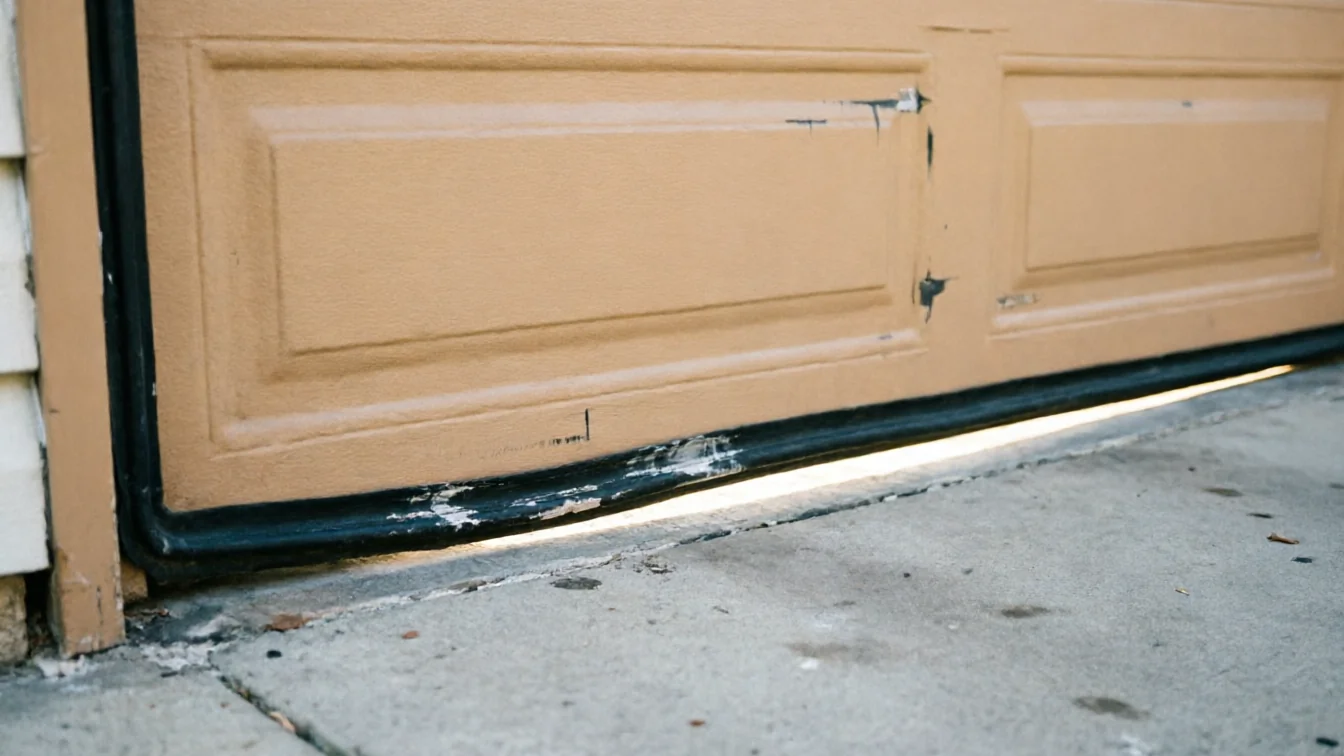
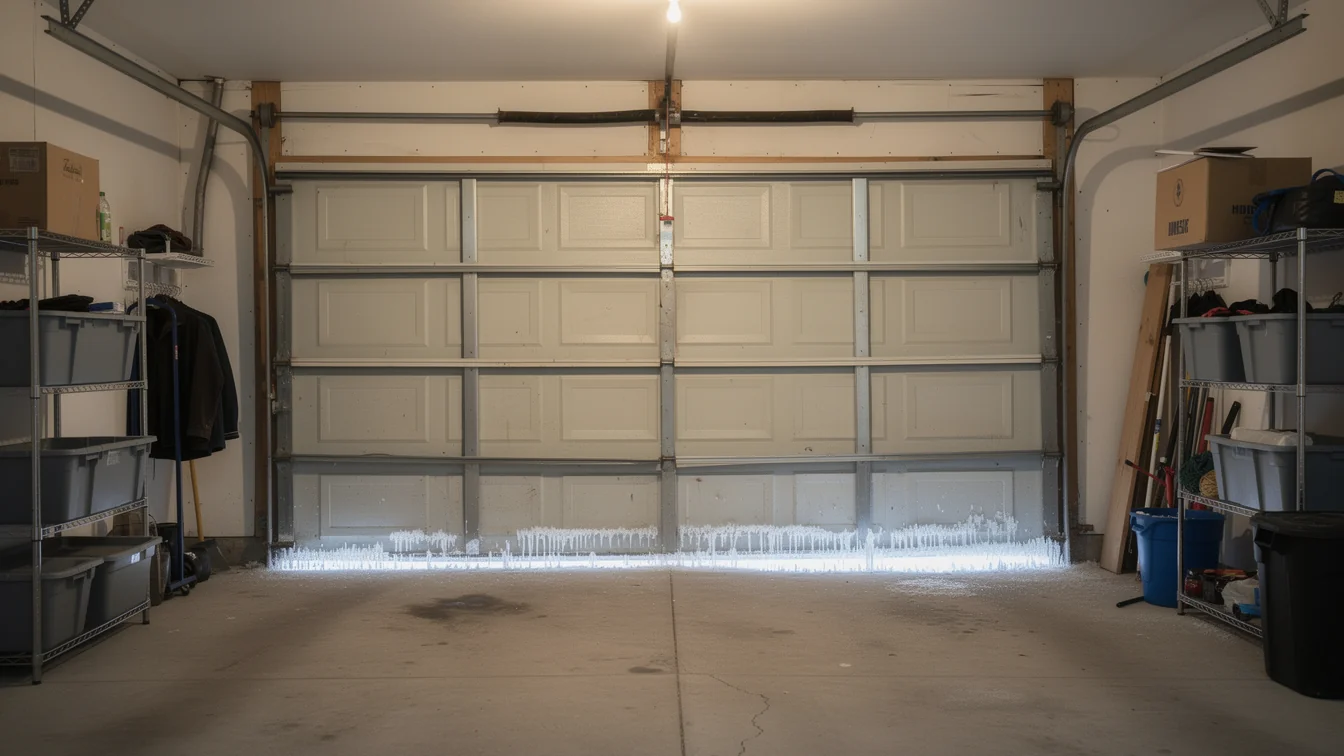
This area sits in a severe cold climate band, and that shows up in garage doors in specific ways. Steel contracts in deep cold, which tightens tolerances on tracks and rollers that were already sized for a house built decades before anyone re-leveled the slab. Grease that was fine in August turns thick in January, which is why openers strain and springs feel heavier on the coldest mornings - the mechanism isn't actually weaker, the lubricant just isn't doing its job. Freeze-thaw cycling at the slab edge also shifts the floor seal over years, which on an older door without a flexible bottom seal means a gap wide enough to let drifting snow in under the door. None of this is dramatic on any single day. It's cumulative: a door built in the 1980s or 90s that's weathered decades of winters here without having the springs, rollers, and seals checked is carrying wear that a milder climate would spread out over twice the years. We tell people to get a once-a-season look at the hardware, less for drama and more because cold is slow and relentless on steel.
Questions
Common questions
Why does my garage door feel harder to lift in winter?
Cold thickens the lubricant on the springs, rollers, and track, so the opener works against more resistance even though nothing is actually broken yet. In a severe cold climate like this one, that stiffness shows up every winter on older hardware that hasn't been re-lubricated in a while.
My house was built in the 80s - is the opener too old to fix?
Possibly. A lot of the housing stock in this market dates to 1962-2008, and parts for opener boards and spring sizes from that window are often discontinued. We'll check first, but if the exact part isn't available anymore, replacing the opener usually ends up cheaper than chasing a match.
How do I tell if it's the spring or the opener?
A loud bang followed by a door that won't lift, or lifts and drops hard, points to a broken spring. Grinding, clicking, or the door reversing on its own usually points to the opener. Either way, stop using the manual release and call before forcing it.
What areas do you cover out from Green Bay?
We work throughout the service area including Allouez, Bellevue, Howard, Ashwaubenon, Suamico, De Pere, and Hobart, out to farther communities like Wrightstown, Kaukauna, and Seymour.
Recommendation
You Might Also Like
More garage door guides for Green Bay homeowners.
What Your Garage Door Is Up Against in Green Bay
Local info on garage door wear in Green Bay's 1962-2008 housing stock, severe cold winters, and what repair or replacement costs actually depend on here.
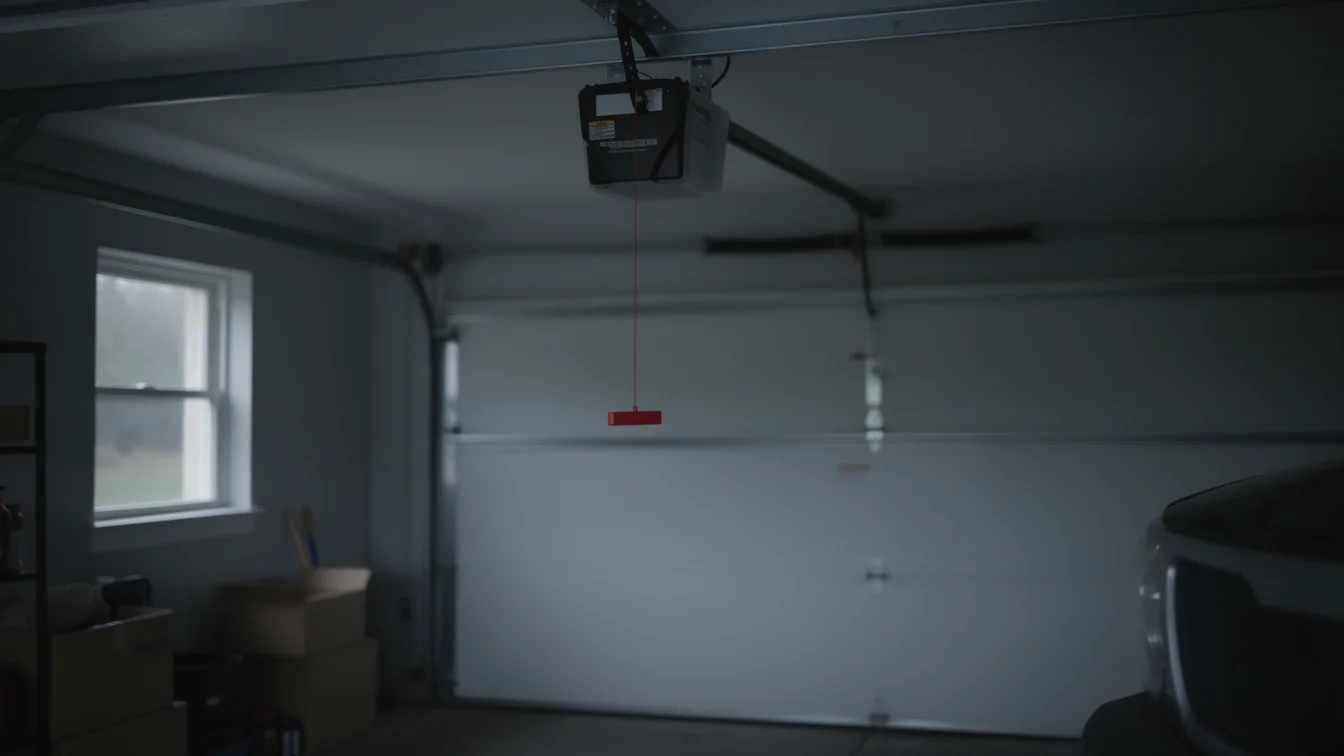 Openers and Power Cuts: What's Really Going On in Green Bay
Green Bay homes built mostly 1962-2008 run openers that weren't made for severe cold or outages.
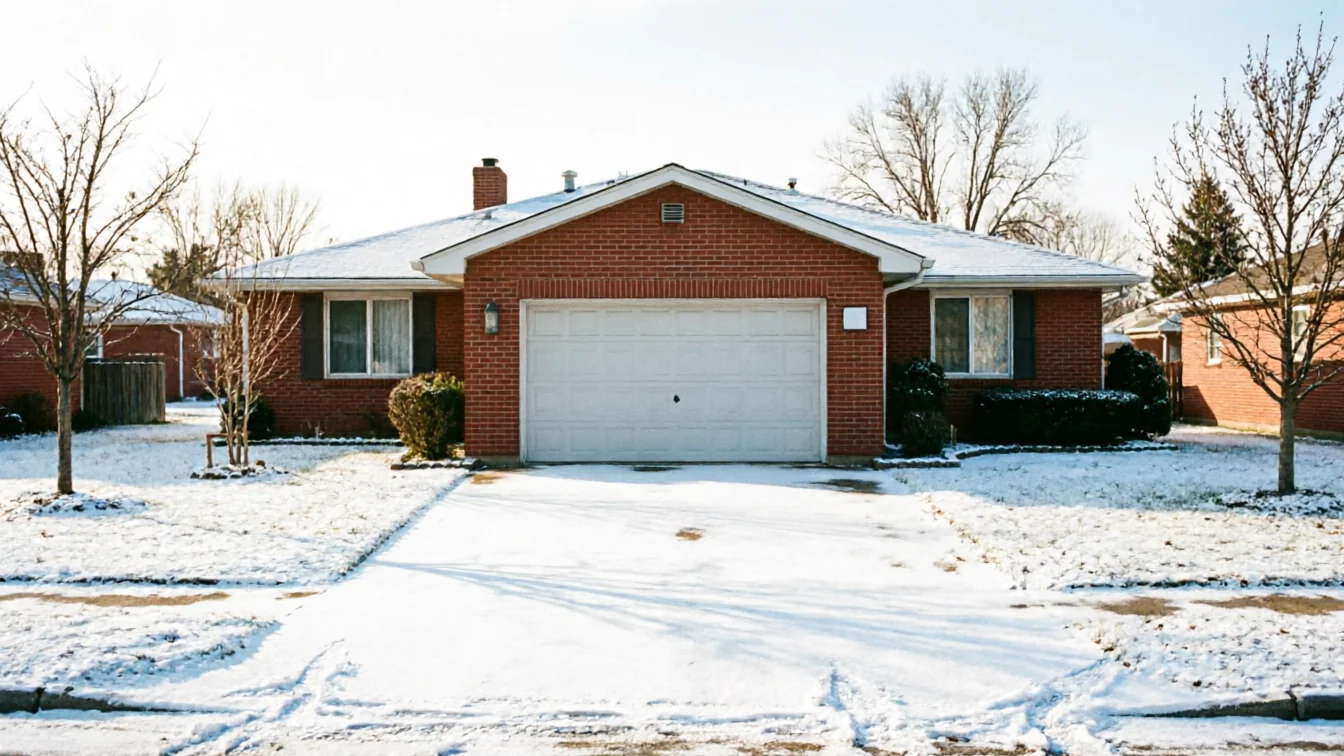 Why Green Bay Garage Doors Break the Way They Do
Green Bay homes mostly date 1962-2008 with hardware built for a cold severe climate.
Ready when you are
Need a garage door sorted in Green Bay?
Green Bay Garage Door Co repairs and installs garage doors, springs and openers in Green Bay, WI and the surrounding area.