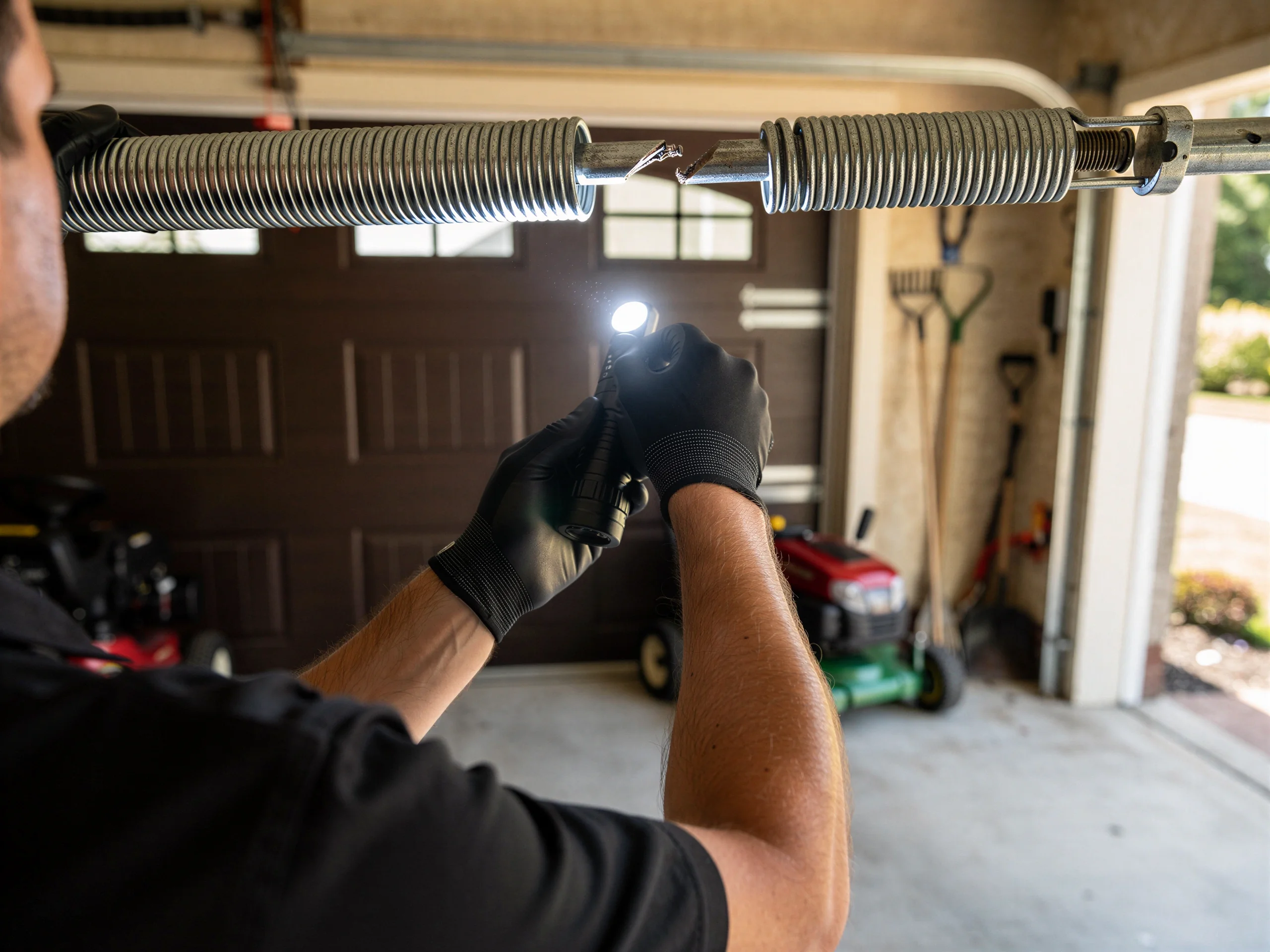
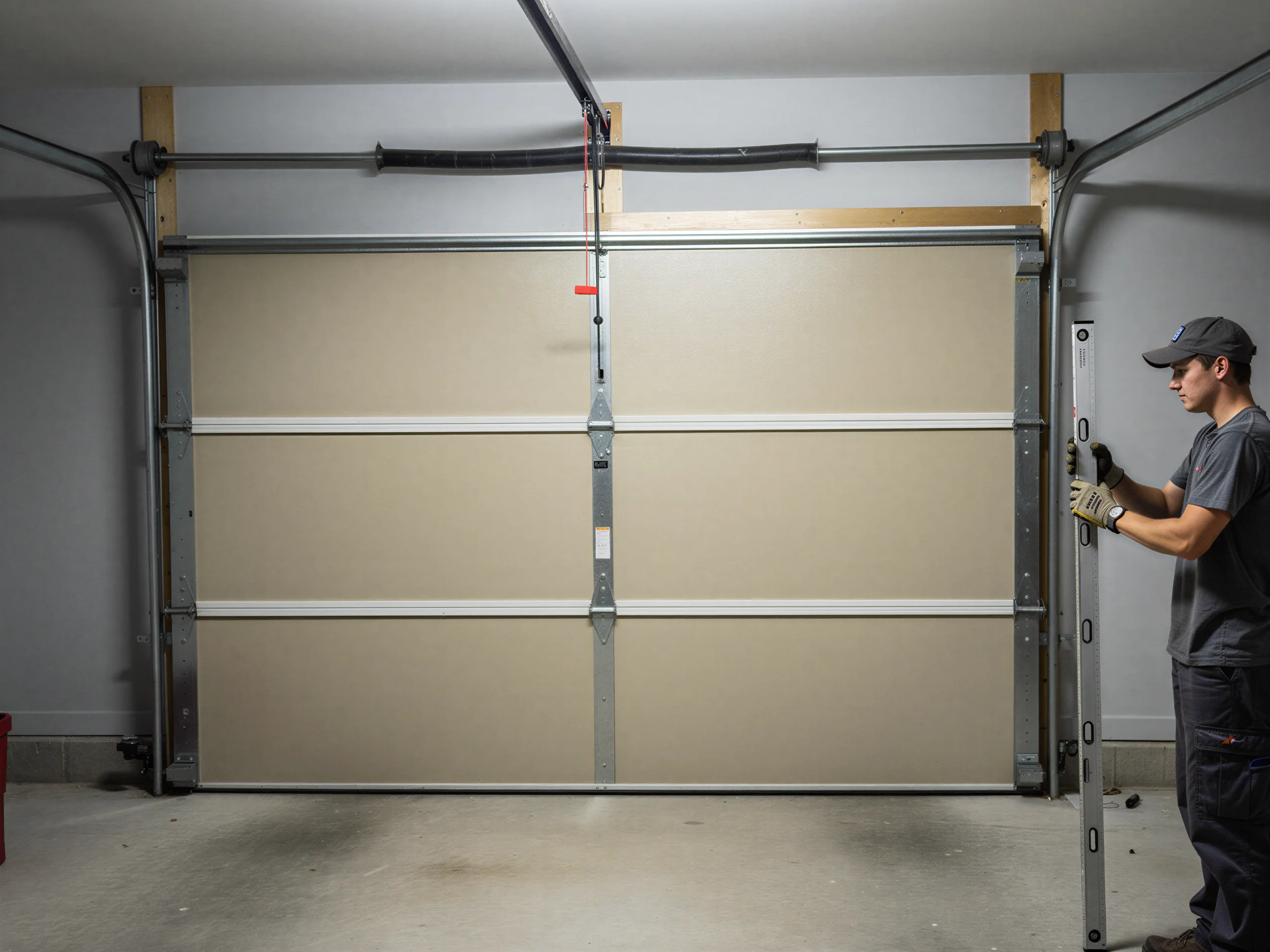
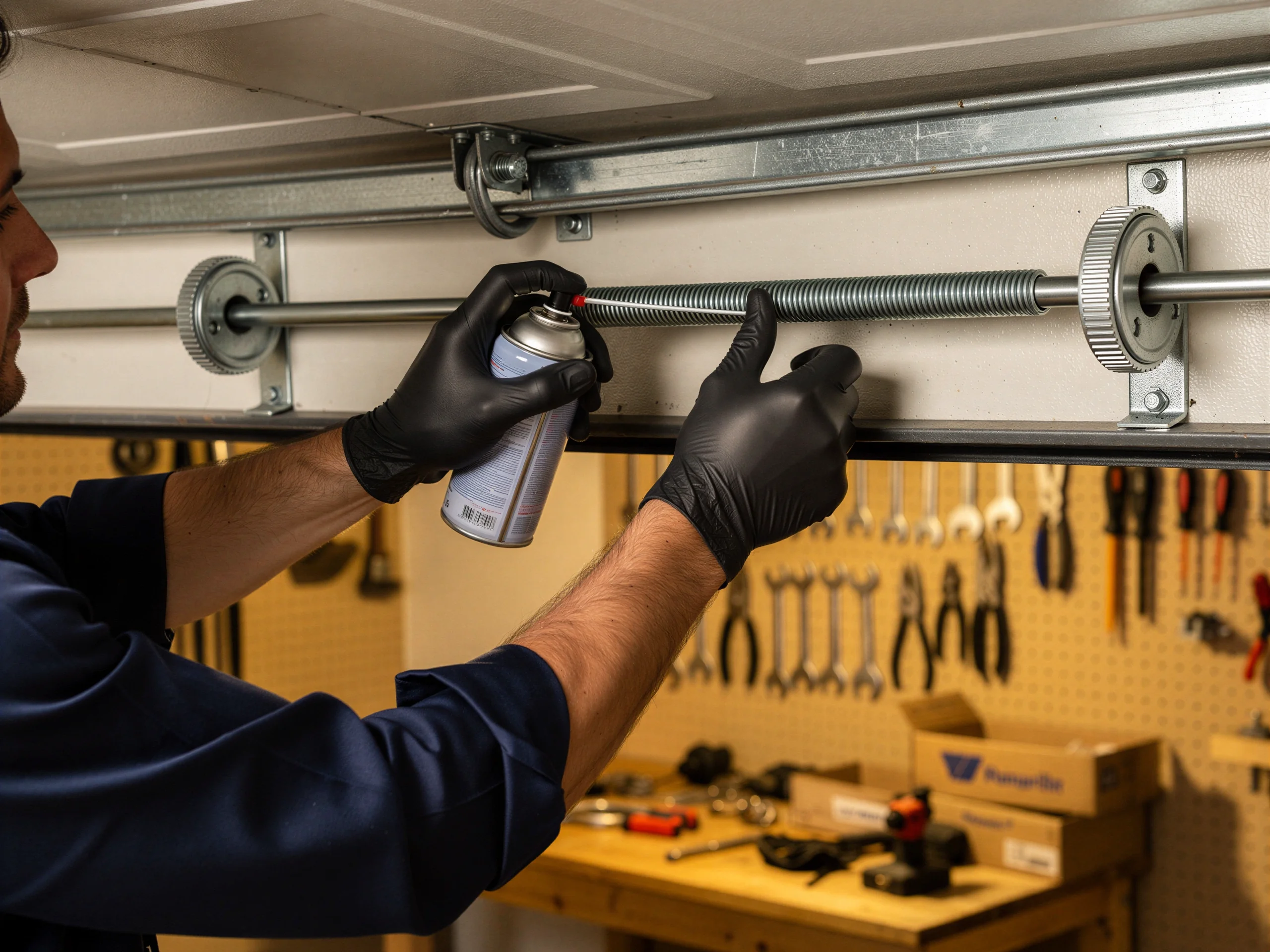
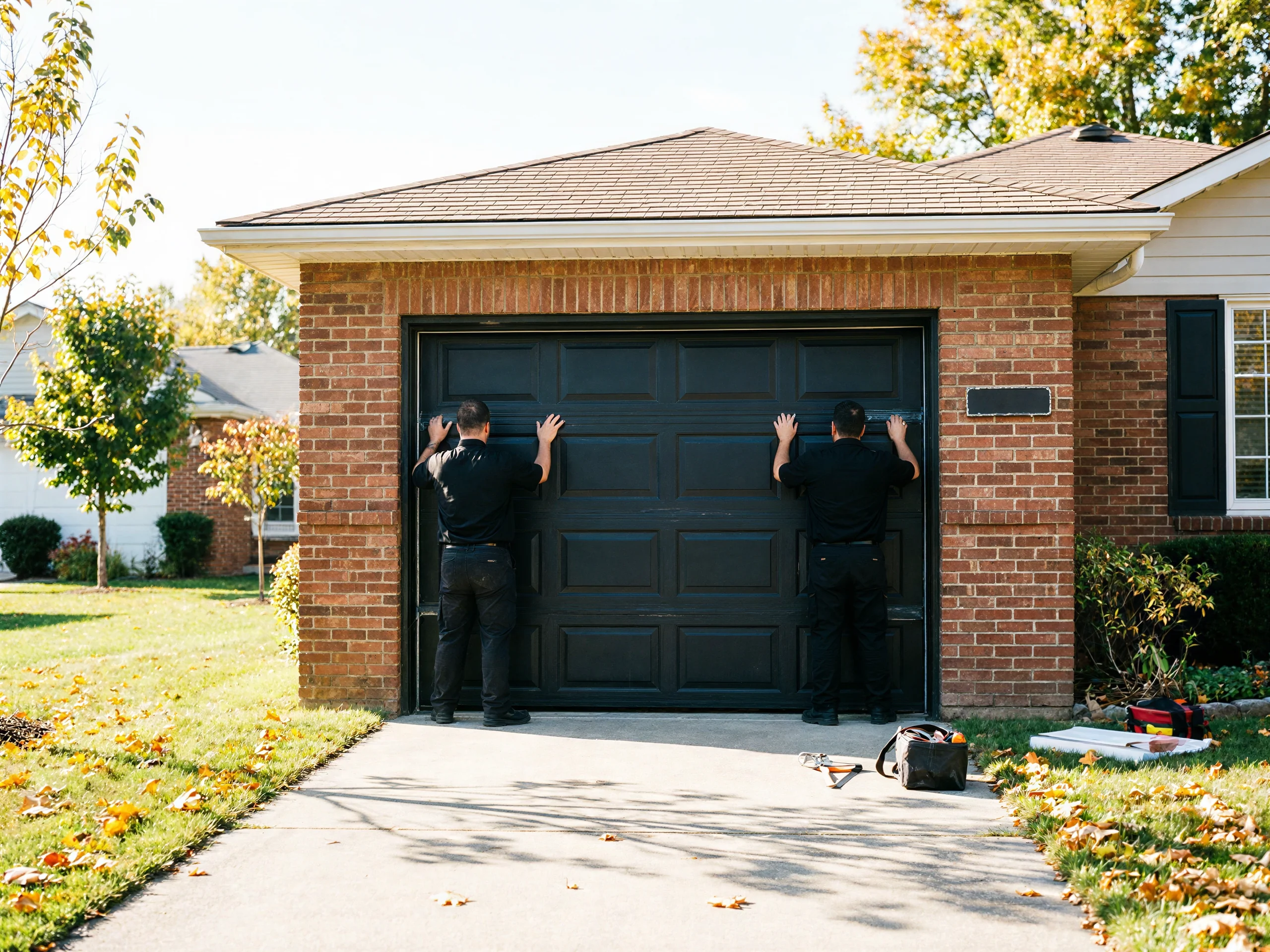
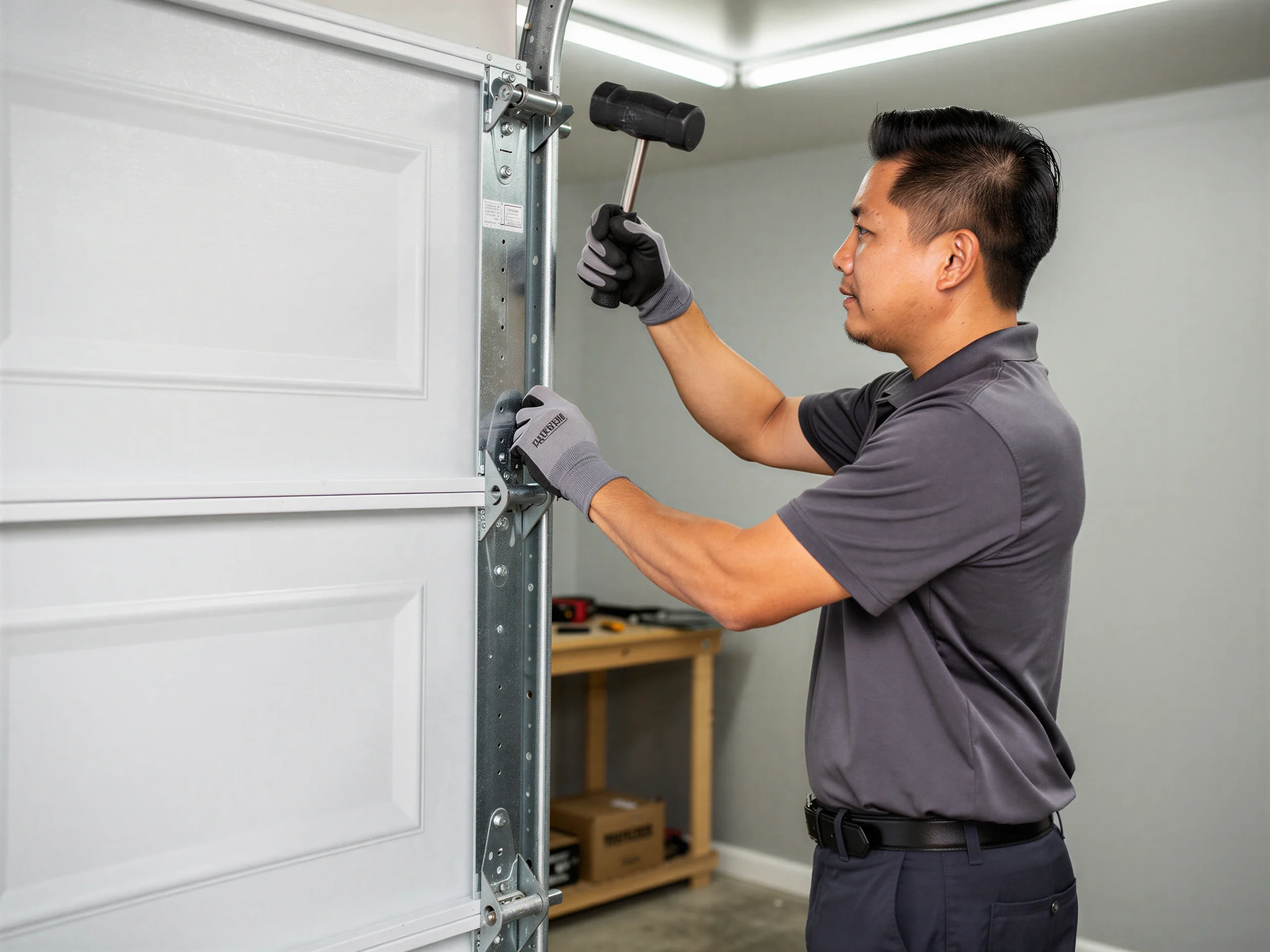
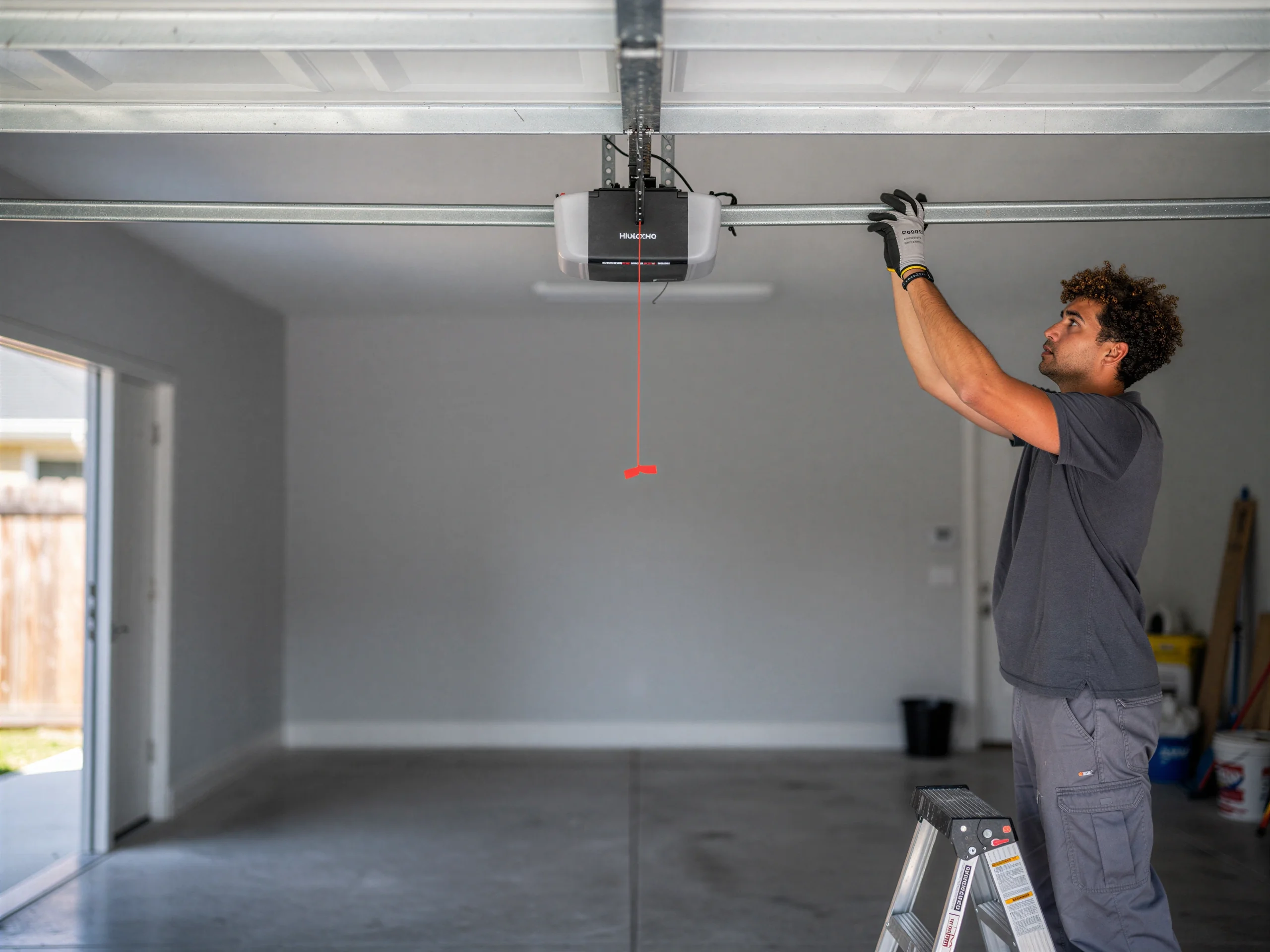
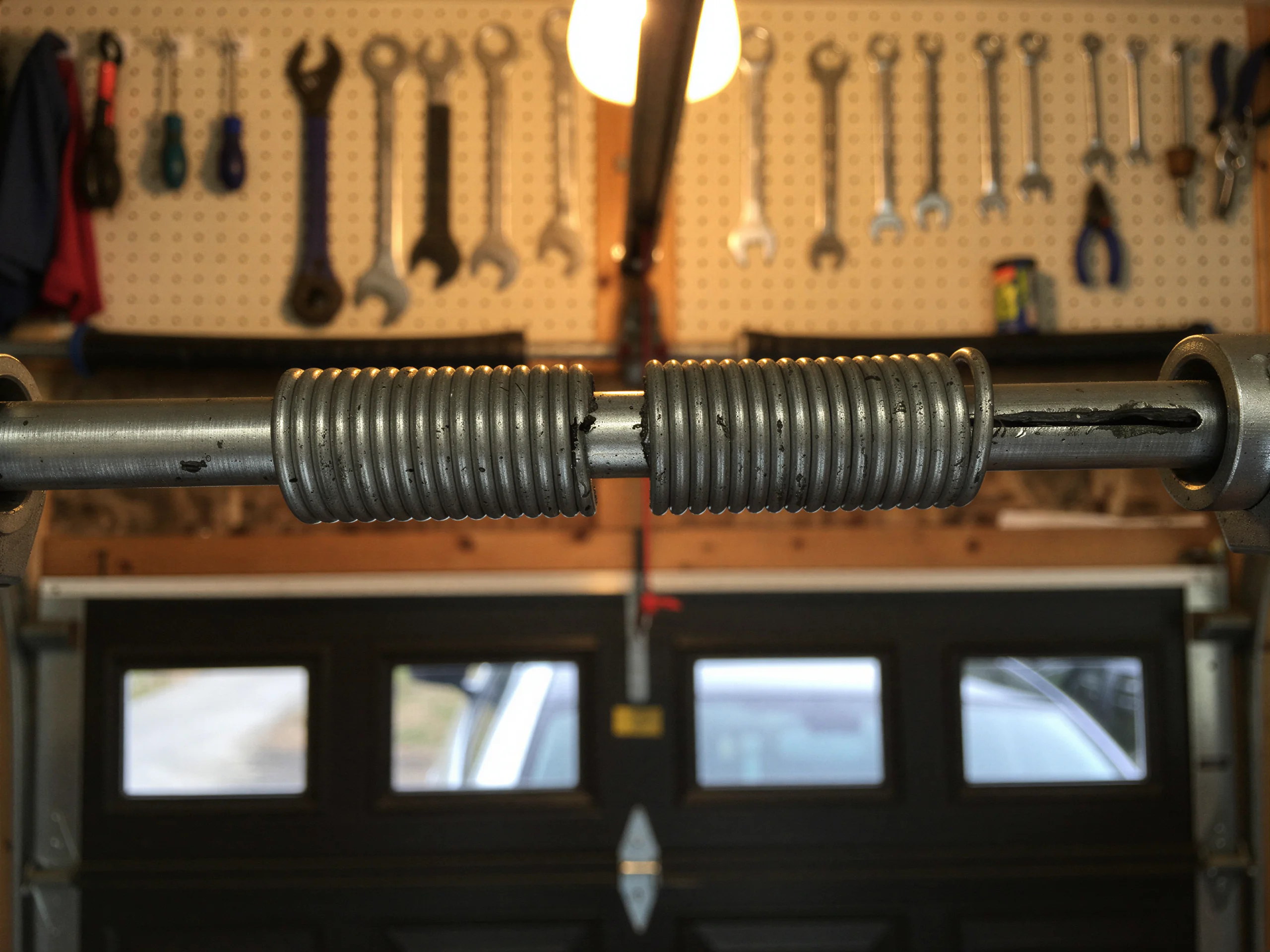
There's a real limit to what you should touch here, and it's the spring. A wound torsion spring on a 16-foot double door carries enough stored force to break a wrist or worse if the winding bars slip, and the tools for it - correctly sized bars, a vise grip or clamp, a stepladder rated for the reach - aren't things most garages have on hand even if the homeowner is handy. If the spring is broken, the safest move is to leave the door down, unplug the opener so it doesn't keep trying to drive against a dead spring, and call it in.
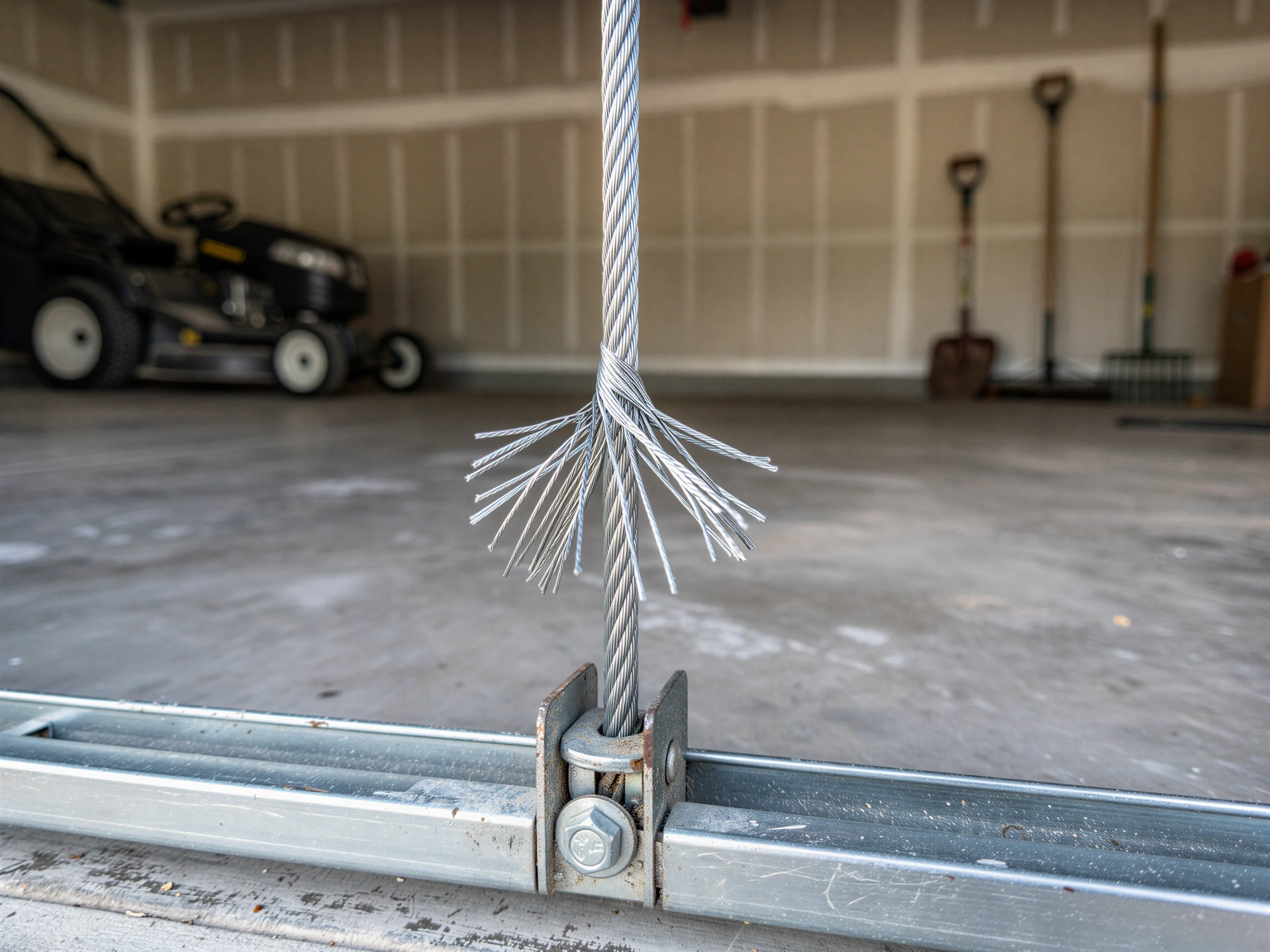
What you can reasonably check yourself: whether the sensors at the bottom of the track are knocked out of alignment (a flashing opener light usually means this), whether the track has visible ice or debris in it after a storm, and whether the door is simply unplugged or the breaker's tripped. None of that requires tools beyond a flashlight. If the door moves but sounds rough - grinding, popping, a loud bang followed by the door going slack - that's a spring or cable, and it's not a DIY job regardless of how simple the fix looks on video. Suamico's cold winters make rushed, cold-hands repairs riskier than they'd be in a milder month.