Cold-stressed rollers and hinges
Rollers and hinges get swapped more than people expect in a severe cold climate; the metal contracts, the nylon gets brittle, and a roller that was fine in August seizes in January.
De Pere, Green Bay
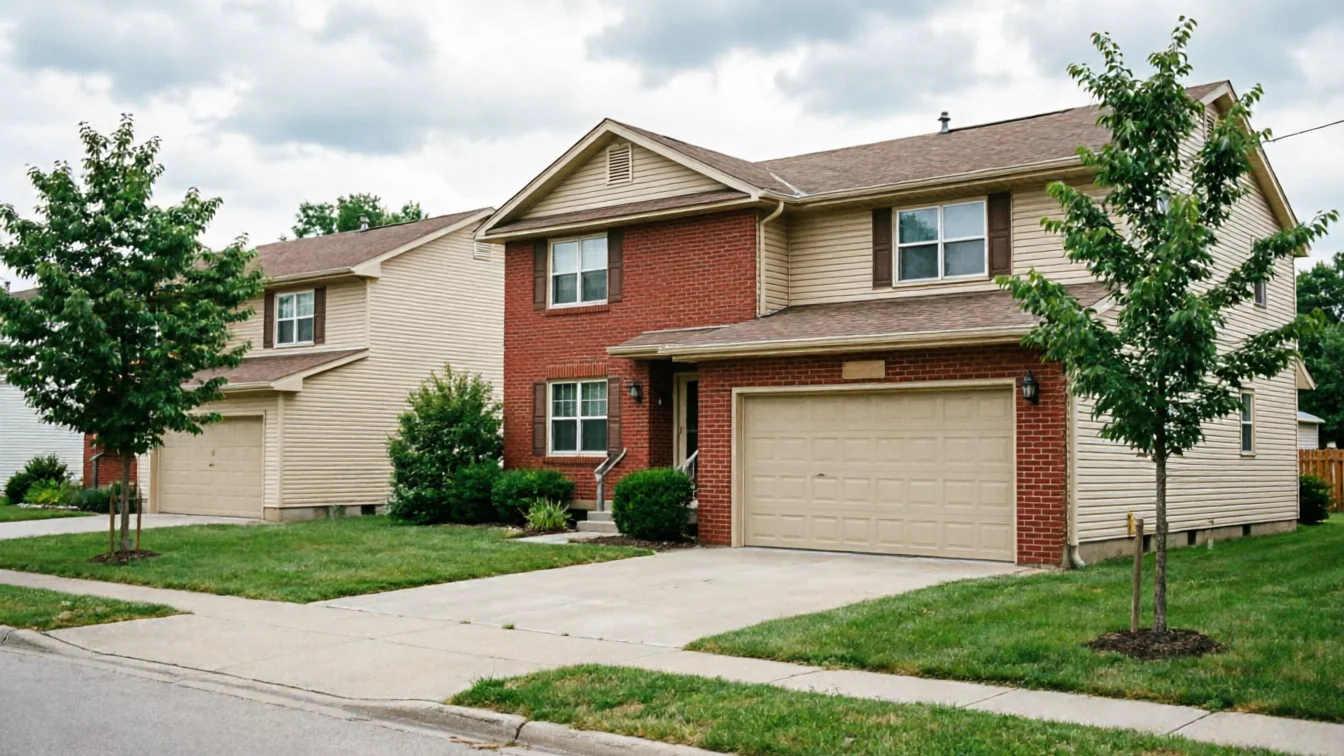
De Pere homes run mid-1980s on average, with original torsion hardware. We travel 8 miles from Green Bay to fix springs, openers, and tracks built for that era.
Watch-outs
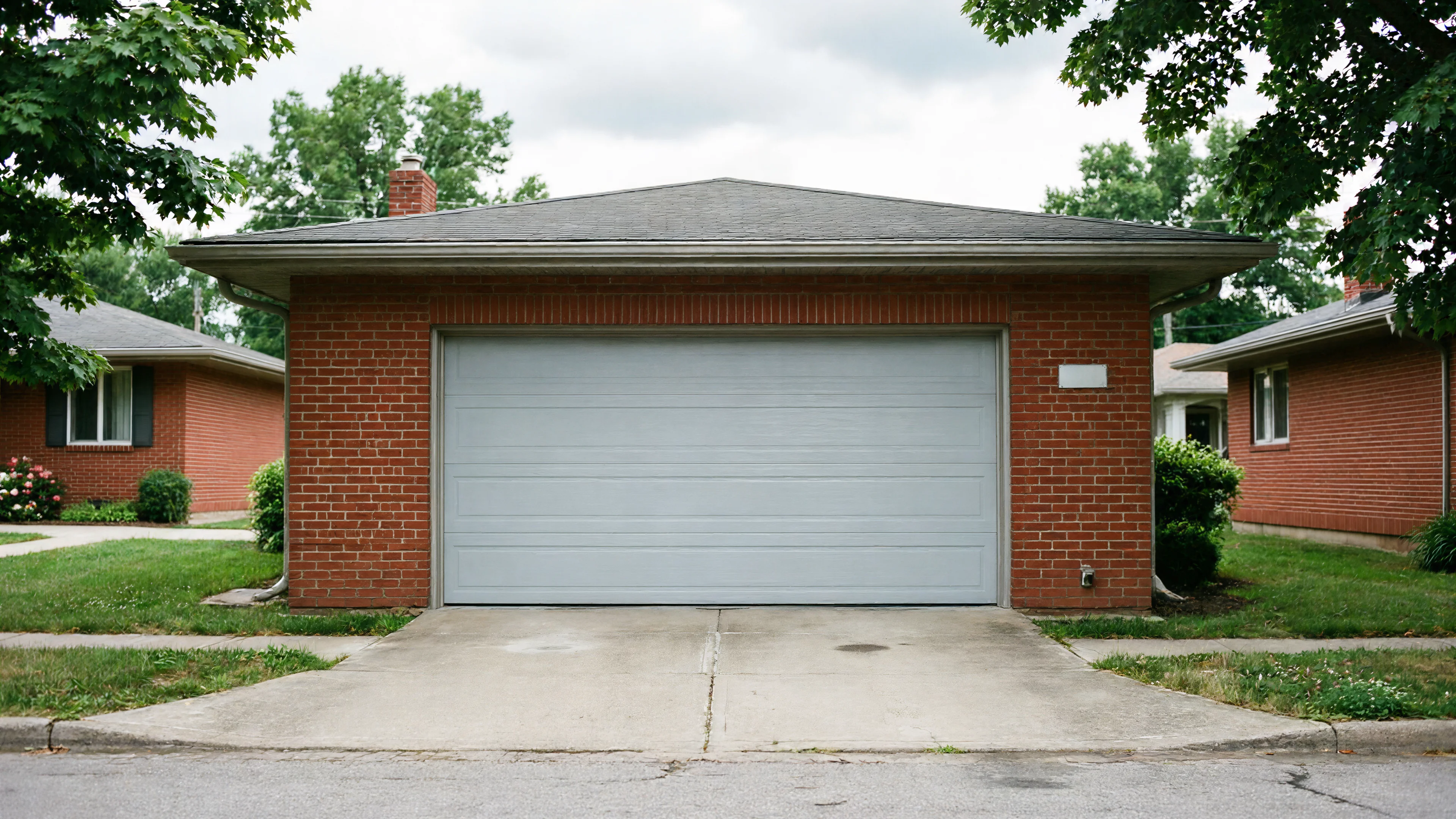
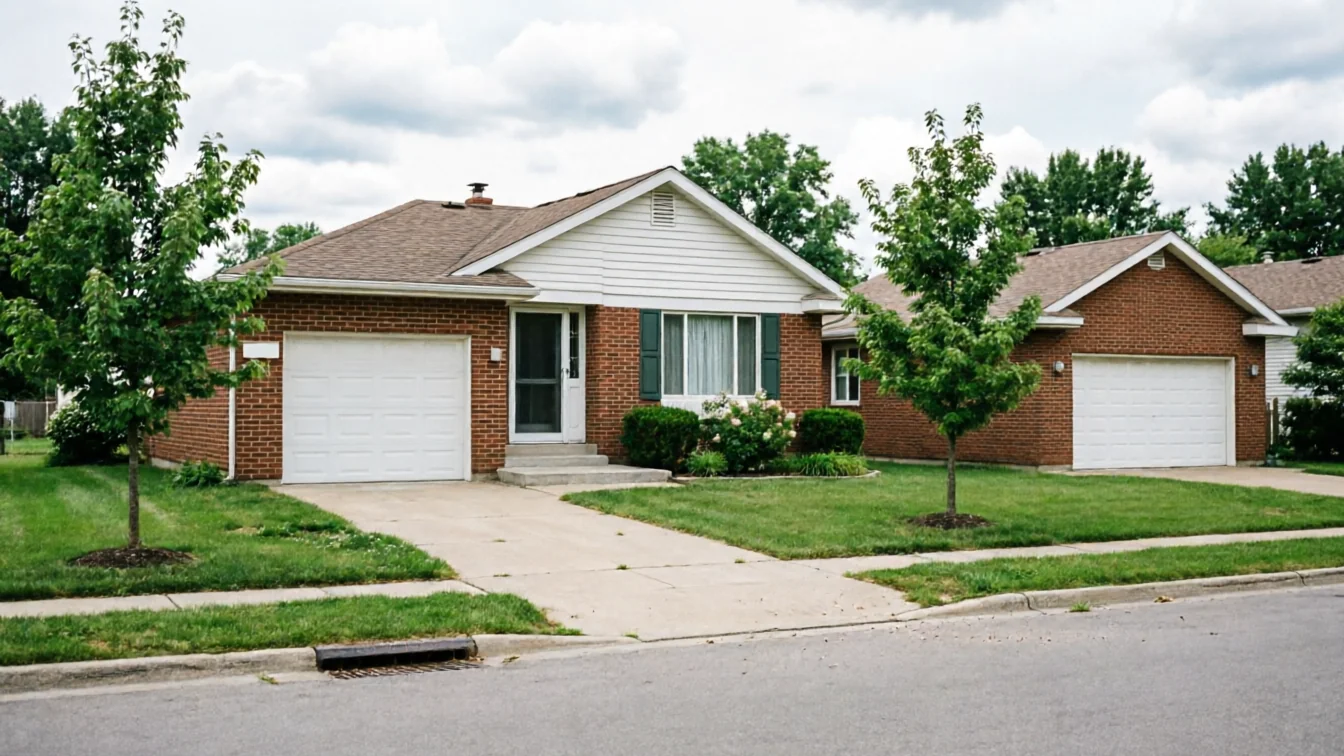
De Pere's median household income runs about $80,550, roughly $16,000 under the $96,607 average we see across the wider service area, and that gap shows up in what people ask us to do here: fix the door that's on it rather than swap in something new. The housing stock backs that up. Across the region the build years span 1962 to 2008 with a median of 1985, and De Pere sits right in that middle stretch - mid-80s construction, which means the garage was built with whatever torsion or extension spring setup was standard then, not what's standard now. A door from that era often has steel that's held up fine but a spring, cable, or roller system that nobody manufactures to the original spec anymore. Add in a climate band the federal data classifies as severe cold, and you get the two failure patterns we see most from this direction: metal fatigue that finally lets go on a hard freeze morning, and openers original to a mid-1980s build that just weren't engineered for 68,143 households' worth of Wisconsin winters. None of that is dramatic. It's just what happens to hardware over four decades in this climate.
On the truck
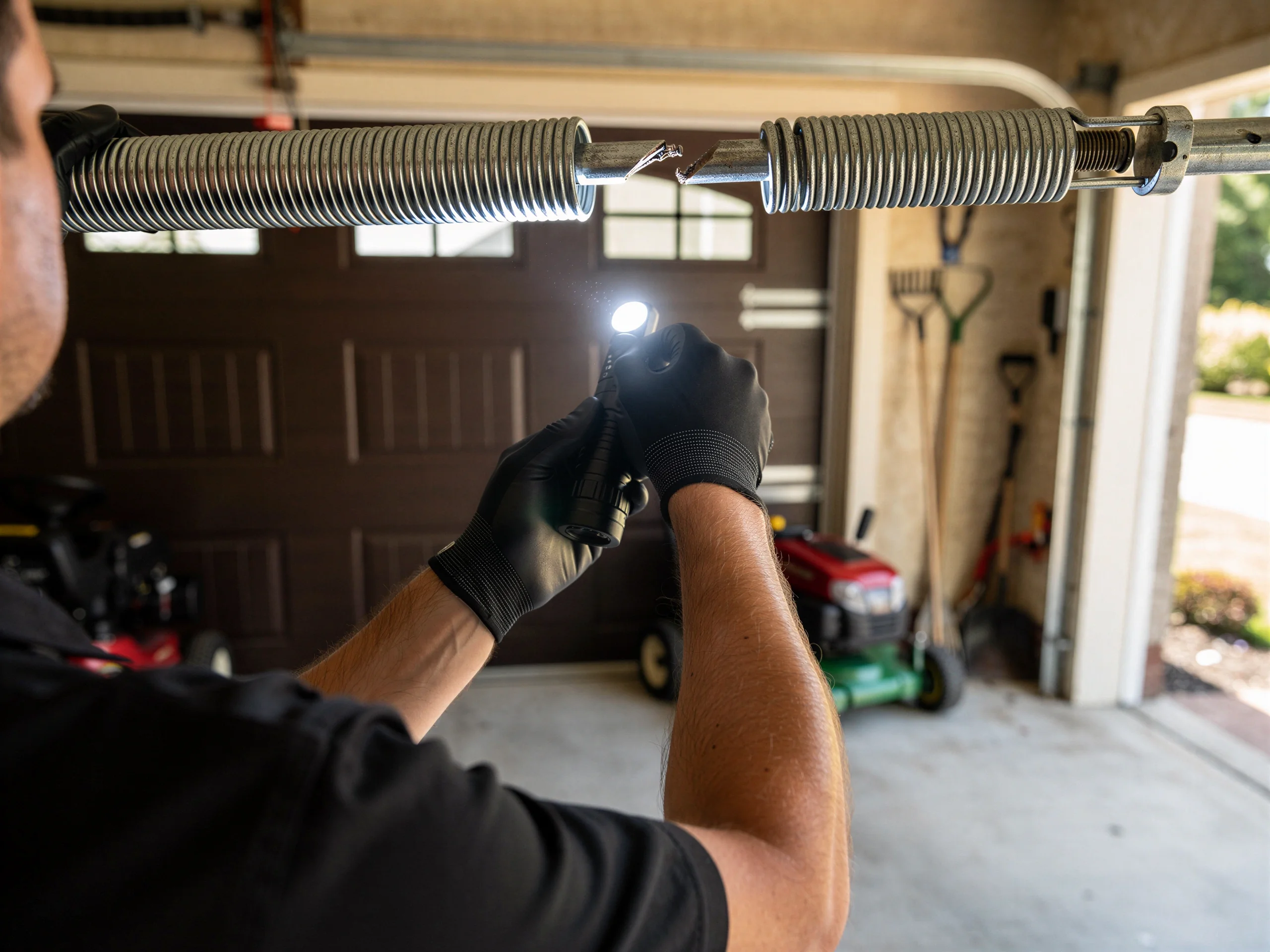
Because the regional housing stock clusters so tightly around that 1962-2008 window, the truck carries torsion springs and extension spring kits sized for both eras - the older side-mounted setups and the center torsion bars that came later in that span.
Rollers and hinges get swapped more than people expect in a severe cold climate; the metal contracts, the nylon gets brittle, and a roller that was fine in August seizes in January.
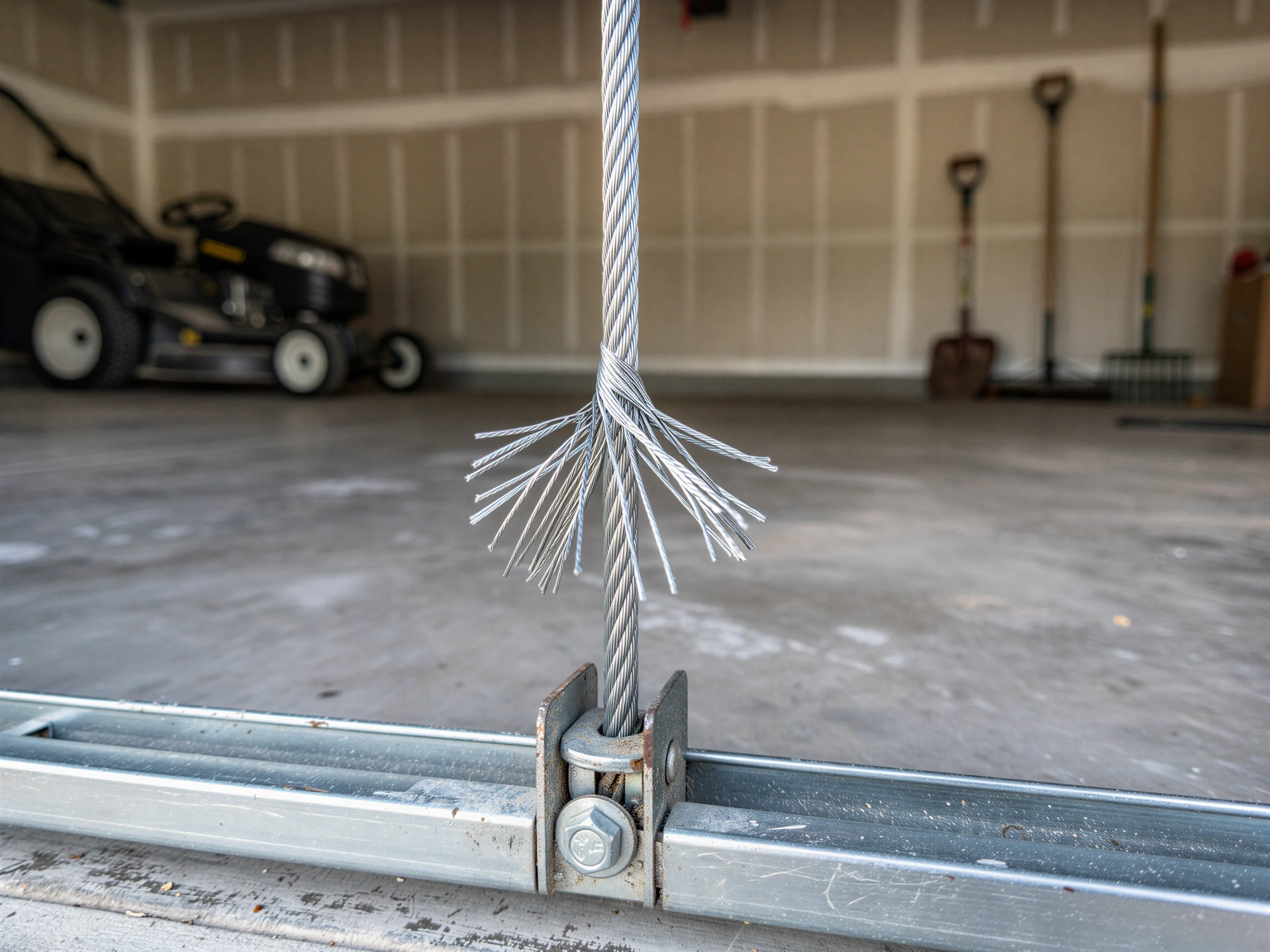
We also carry cable and track hardware rated for the cold rather than generic stock, because a standard cable in a severe winter climate stretches and frays faster than one rated for it.
What we don't carry on the truck is every proprietary opener board for every brand sold since 1985 - if your opener is an obscure model, that part sometimes has to be ordered, and we'll tell you that up front rather than make you wait at the curb while we guess.
DIY or pro
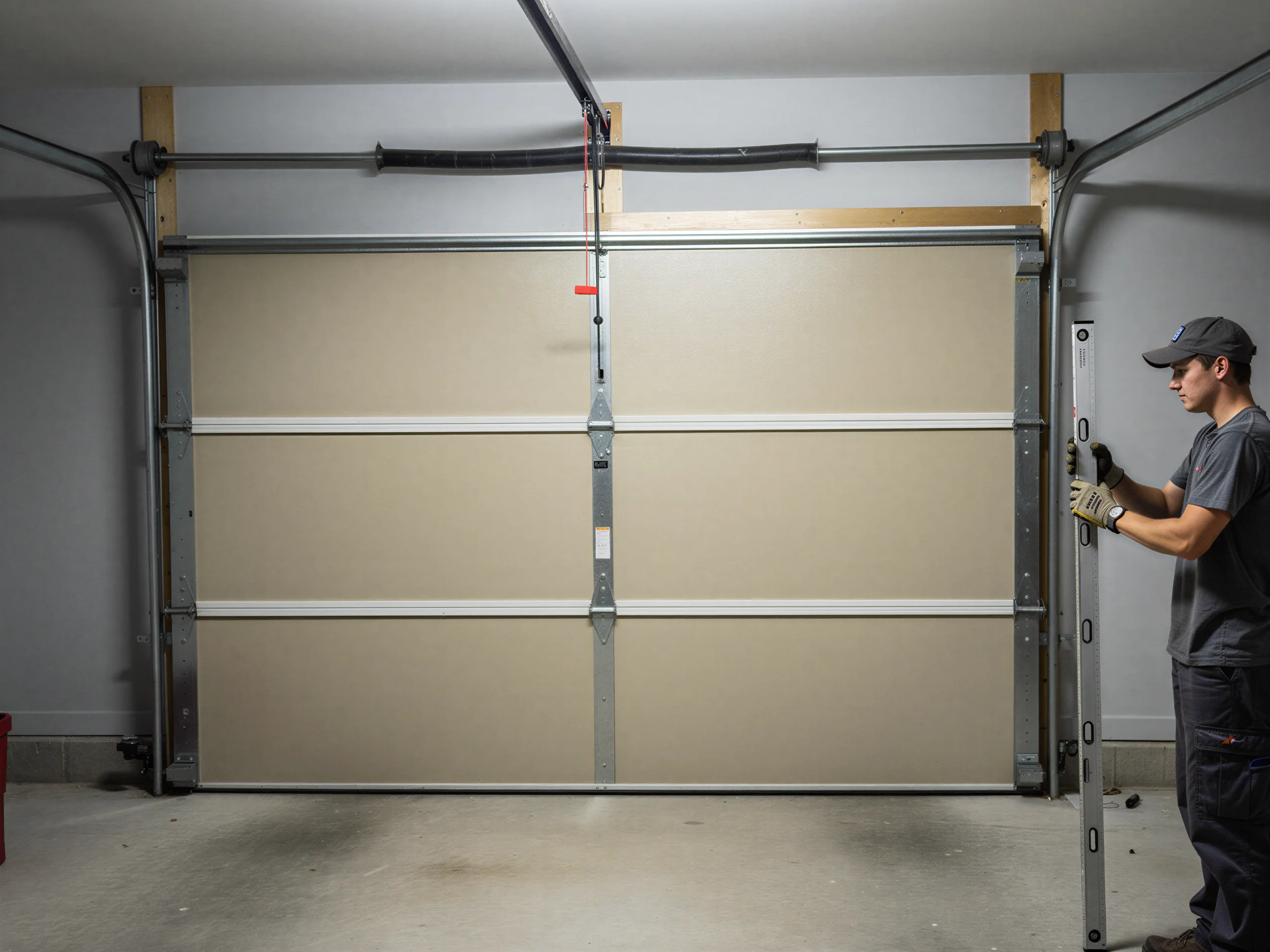
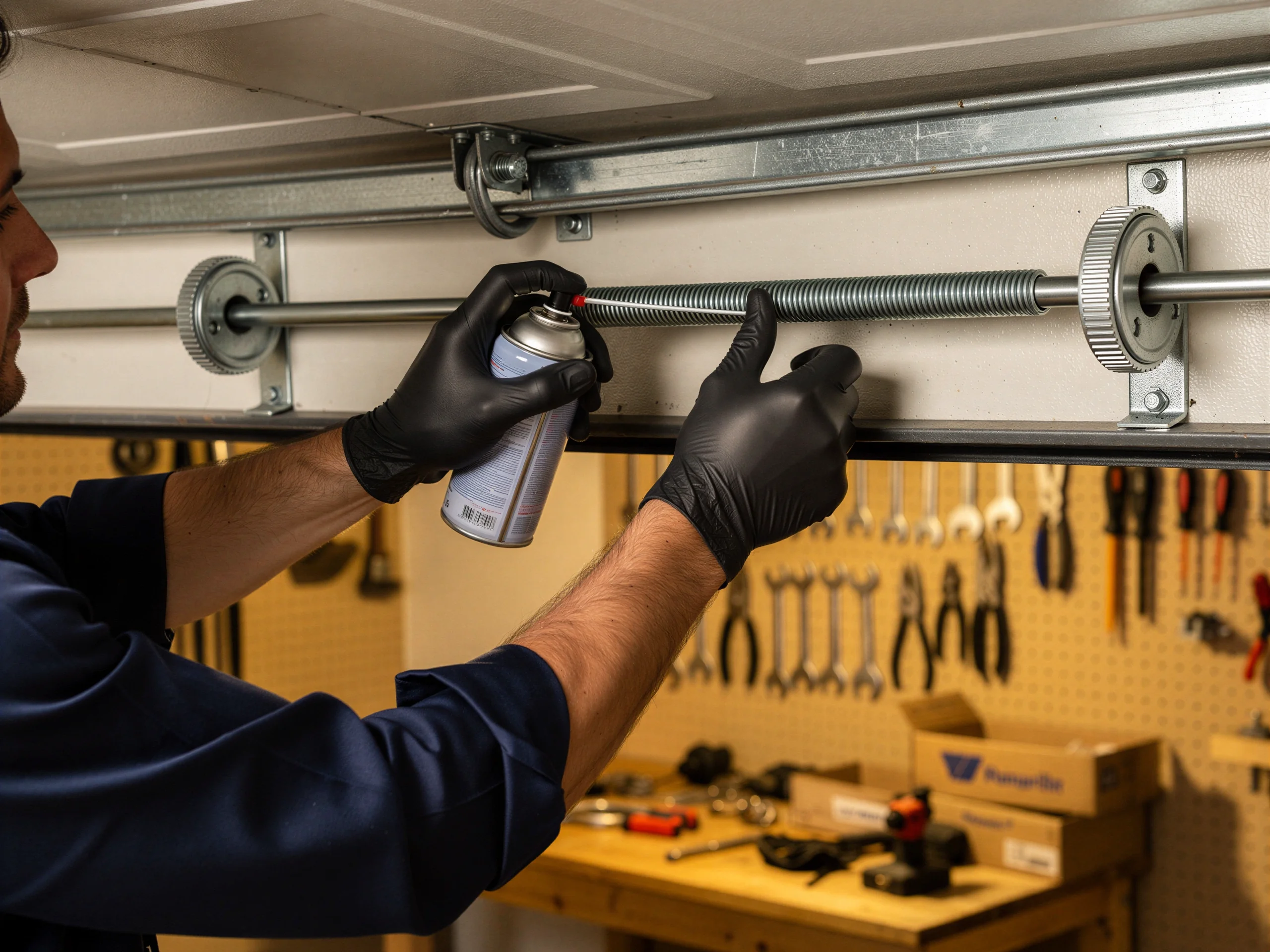
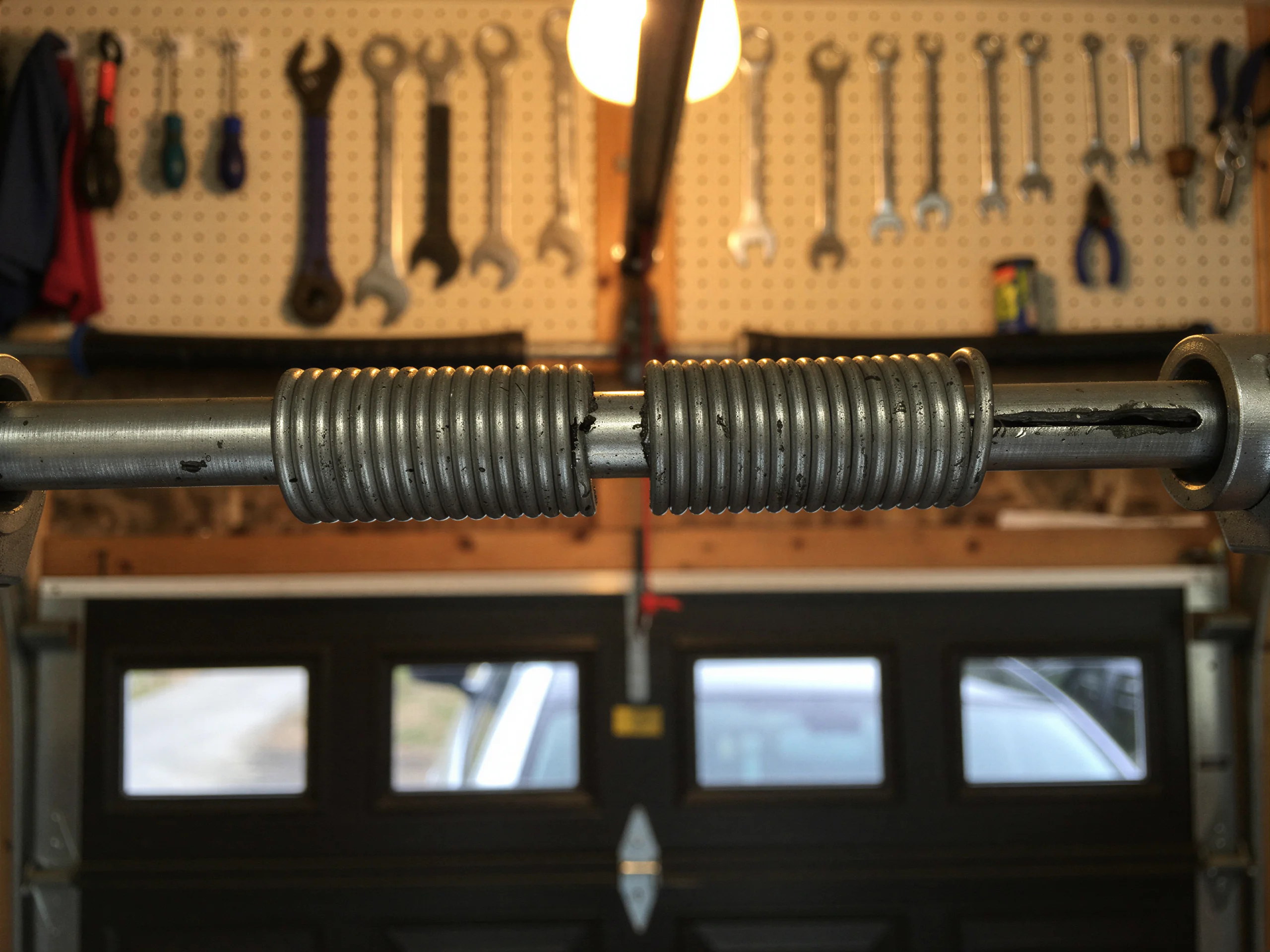
Some of this is reasonable to do yourself. Lubricating rollers and hinges, tightening loose hardware on the track brackets, checking that the auto-reverse sensors aren't knocked out of alignment - all fair weekend work, and all things that matter more in a severe cold climate where dry metal binds faster. What isn't reasonable is touching the torsion spring. A door built in the mid-1980s, which describes a lot of De Pere's housing stock, is under the same spring tension now as it was the day it went up, and that tension doesn't go away because the spring is old or rusted - if anything it's more dangerous because the metal is more likely to fail suddenly. We won't talk anyone through a spring swap over the phone, and if a shop offers to, that's worth being suspicious of. Replacing a cable while the spring is still loaded is the same problem in a different shape. If you're not sure whether what you're looking at is a spring job, send a photo before you touch it.
Pricing
We don't post a flat price list here, because what a job costs in De Pere depends on what's actually broken and what parts a mid-1980s-era door needs versus a newer one - a torsion spring job isn't priced the same as an opener board replacement, and guessing a number before we've seen the door does nobody any favors. What we can tell you is that the truck comes from Green Bay, about 8 miles away, and that travel isn't itemized separately into some surprise line item. Given the income range in this area runs below the broader service-area average, we'd rather quote the actual repair than pad an estimate - if replacement makes more financial sense than a repair on an older door, we'll say so instead of running up a bill on a door that's past the point of being worth saving.
Questions
No. We're based in Green Bay and travel the 8 miles to De Pere for calls. There's no local branch or depot here - it's the same truck and the same stock that covers the rest of the service area.
A lot of De Pere's housing stock was built right around 1985, and openers from that era weren't built for decades of severe cold cycling. Cold metal contracts, lubricant thickens, and the strain on an aging motor and gear set shows up fastest in January.
Depends on the door. If the panels and track are sound and it's just the spring or cable, repair makes sense. If the door is original to a mid-1980s build and multiple systems are failing at once, replacement often costs less over time than repeated repair calls.
We'd advise against it. A torsion spring holds the same tension whether it was installed in 1985 or last year, and older, more fatigued springs are more likely to fail suddenly under that tension. It's one job we always send a tech for.
Explore more
Ready when you are
Green Bay Garage Door Co repairs and installs garage doors, springs and openers in Green Bay, WI and the surrounding area.